How Visit Florida is turning a destination into a lifestyle
Visit Florida’s CMO Brett Laiken takes his cues from lifestyle brands rather than rivals when it comes to positioning the Sunshine State for further growth.
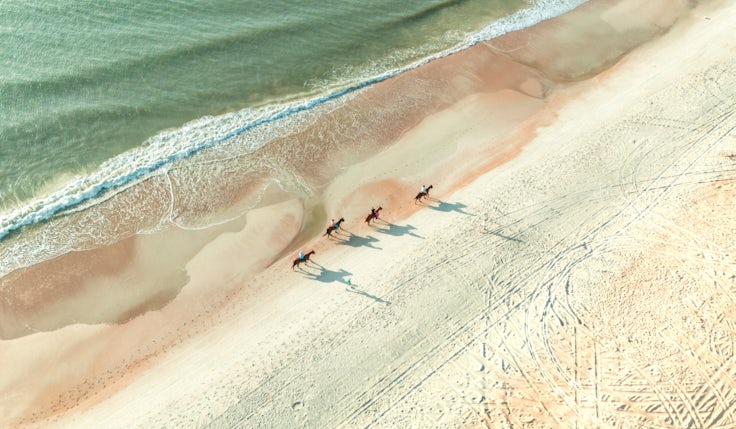 When Visit Florida unveiled its ‘Live More Floridays’ campaign earlier this year, it marked the culmination of an 18-month rethink of one of the world’s best-known tourism destinations. For CMO Brett Laiken, the aim was simple but ambitious: to turn Florida from a place you visit into a lifestyle you yearn for.
“Our goal was to move beyond being just a travel brand,” Laiken says. “We wanted to become part of the everyday conversation. To be relevant even when you’re not planning your next trip.”
Research carried out across key markets, including the UK, uncovered a central insight that became the creative foundation, “the new in the known”, as Laiken puts it.
Florida’s beaches and theme parks are world-famous, but he wanted to encourage travellers to explore beyond the obvious.
“People know us for the castle and the coastline, and we love that,” he says. “But there’s so much more to see. The idea was to go to your comfort zone and then branch out a little – to discover something new without leaving what you love behind.”
That philosophy led to a different kind of storytelling. A visitor spending two weeks in Orlando might now be prompted to spend a day swimming with manatees in Crystal River or zip-lining over alligators in Kissimmee. For others, it might mean trying paddle-boarding, golf or a short road trip to a hidden stretch of coast.
The point, Laiken says, is to make discovery feel accessible rather than intimidating. “It’s all anchored in familiarity,” he points out. “You can dip into adventure and still go back to the beach or the theme park afterwards.”
Reframing Florida in this way meant looking beyond the traditional cues of destination marketing and studying the brands that have succeeded in embedding themselves in people’s daily lives.
“We looked at what makes lifestyle brands work,” says Laiken. “You might buy Nike for sporting pedigree, for example, but someone else will buy it for fashion. You might love Apple for the camera or because it feels modern. We wanted Florida to be the same – it should be whatever you need it to be.”
‘Like a startup’: Inside the rise of travel media networksThat thinking led Visit Florida to collaborate with Margaritaville, the US hospitality empire built around the late Jimmy Buffett’s laid-back musical brand. Buffett’s band, the Coral Reefers, rerecorded his song ‘Floridays’ for the campaign soundtrack. “Margaritaville is the perfect partner,” says Laiken. “It captures that spirit of contemporary but approachable escapism we’re trying to express.”
The campaign also responds to how travel is now experienced and shared. “Travel has become such a visual, social thing,” Laiken says. “People are always looking for something new to post, something their friends haven’t already done. Even for me, after 20 years living in Florida, there are parts of the state I’ve never been to.”
That approach has a practical purpose too. Florida attracted 143 million visitors last year, including 72 million to Orlando alone. Laiken isn’t concerned about over-tourism, but he does want to encourage dispersion – spreading travellers across the state’s 67 counties and showing them that there’s far more to experience than they might think.
“We’re not worried about too many visitors in one place,” Laiken says. “We see it as an opportunity for dispersion. Orlando has incredible golf, but so does Cabot Citrus, north of Tampa. Palm Beach is famous for luxury, but 30 minutes away, you can be in the Everglades. That’s the story we want to tell.”
He describes Florida as “an unapologetic repeat destination” rather than a bucket-list location to be ticked off once. “If I go back to New Jersey where I grew up, it’s the same experience every visit,” he says. “In Florida, you can come back and it’s always new.”
Working in harmony
Demonstrating the effectiveness of such a broad repositioning requires sophisticated measurement. Visit Florida is working with Tourism Economics, part of Oxford Economics, on what Laiken calls a “media impact calculator” that tracks the financial impact of advertising across markets in granular detail.
“It lets us see how the campaign performs in London versus Manchester, or Edinburgh versus Dublin, and link that directly to spending patterns,” he explains. “When someone from London who saw this ad travels to Orlando, we can see how much they spent. When someone from Manchester goes to Tampa, we can compare that. It’s the first time a state has tried to get this detailed.”
Those insights are shared with regional tourism boards so they can refine their own marketing. “We almost act as servant leaders,” says Laiken. “We do research that smaller destinations can’t always afford, and we feed that back. If we see people from Boston staying longer in Dunedin after seeing a certain message, we tell them that. It’s about giving everyone the data they need.”
Collaboration with local tourism agencies is central to the model. Laiken describes Visit Florida’s role as creating the halo while regional partners deliver the close-up. “We sell Florida at 30,000 feet – what the state means emotionally. They sell the detail of their destinations. It’s like a brand family in CPG. I want you to buy into Adidas, but each trainer line still has its own manager and story.”
Airbnb shifts ad focus ‘from TV to social’ as marketing investment grows 19%Although the bulk of visitors remain domestic, international markets such as the UK, Canada and Brazil are strategically important. “International visitors stay longer and spend more,” Laiken notes. But tourism inevitably exists against a political backdrop – and one that has become increasingly contested in Donald Trump’s presidency – but Laiken is clear that Visit Florida’s focus remains apolitical.
“It would be naïve to pretend politics doesn’t affect sentiment, but our role isn’t political,” he says. “People will always look for happiness and connection. We sell sunshine – that’s what we do.”
Most travel destinations suffered during the pandemic but Florida weathered it better than most. While others paused promotion, the state stayed visible, helped by the state lifting restrictions earlier than many others.
“We were the first to start advertising again,” Laiken recalls. “People think of Florida as theme parks and beaches, but we have 15,000 miles of trails and over 100 state parks. It allowed us to show a side of Florida that even regular visitors hadn’t seen.”
The state’s visitor numbers have since rebounded strongly: overall visitation has held steady while Florida’s share of the travel market has grown. “That’s success for us,” he says. “We’ve stayed in people’s minds.”
When asked what success might look like five years from now, Laiken has a goal in mind. “If people start saying, ‘I need a Floriday,’ we’ll know we’ve made it,” he says. “If someone’s in Chicago and it’s snowing or in London on a grey afternoon, and they say they need a Floriday to lift their mood – that’s the dream. If we can make Floriday part of everyday language — like Netflix and chill — that’s success.”