‘Link brand directly to business strategy’: Law firm Clifford Chance on getting buy-in for its rebrand
Global law firm Clifford Chance has rebranded as it looks to position “brand as a strategic asset”.

Having undergone a brand refresh in September, magic circle law firm Clifford Chance is using the opportunity to better reflect its proposition and focus more on its people.
For Denese Edgar, global head of marketing at the firm, the reason for rebranding was simple: after not touching its visual identity for two decade, work was needed to update the brand’s image and better reflect its commitment to “client advantage” and global strategy.
“It’s not about showcasing a product, because our people are what we do,” she said on the role of marketing in legal services.
For Edgar, the priority for the refresh was “showcasing a consistent client-led proposition” that stretched across different geographies and cultures.
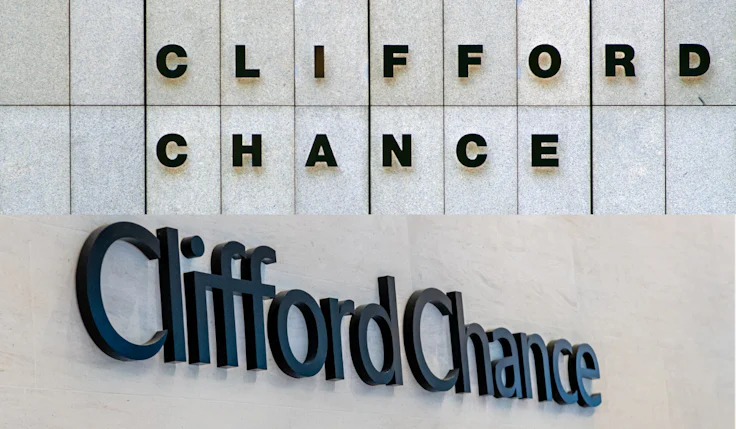
As a result, the branding is cleaner and more modern to be in step with the changing landscape of legal world and to reflect the brand’s premium positioning.
But in order to get buy-in from senior leaders, a degree of education was needed within the business about the role of brand, as the sector as a whole doesn’t prioritise it as an area for investment.
“In legal services, brand isn’t traditionally something people think of as a strategic asset,” Edgar says. “We had to show that it’s not just a logo, it’s a way of enabling business strategy and helping our people deliver a more consistent experience for clients.”
This is the biggest take-away for her when it comes to getting senior stakeholders on board.
“You’ve got to link brand directly to business strategy,” she says. “You can’t just stick a new logo on and expect transformation. You have to understand the organisation, show how brand supports its goals, and bring people with you.”
It’s not about showcasing a product, because our people are what we do.
Denese Edgar, Clifford Chance
That education came through collaboration. The marketing team worked closely with IT, business development and leadership to make sure changes were understood and implemented properly.
“You can’t just dump a new brand on people,” Edgar says. “You need to bring them along, show what it means for their area, and work with them to make it real.”
“We didn’t just need a new look,” says Edgar. “We needed strategic foundations. We wanted to understand how clients saw us, what made us unique, and how to express that consistently across different regions and cultures.”
Where to start
The process began with insight, rather than design. Over two years, the firm carried out research with clients and employees to test long-held assumptions about how Clifford Chance was perceived.
“We didn’t want to just believe our own stories,” she explains. “We wanted an honest understanding of what we stood for, not what we hoped we stood for.”
That focus on truth became the basis for the brand’s proposition. Only once those strategic elements were clear did the visual identity follow.
“It’s easy to start with the logo, but the logo only means something if it sits on solid ground,” Edgar says. “This was about getting those foundations right first.”
A brand touches every part of a business, so it can’t sit in one department.
Denese Edgar, Clifford Chance
Edgar describes the rebrand as a business initiative, not a marketing one. The project was led by the firm’s managing partner and supported by teams across the organisation.
“A brand touches every part of a business, so it can’t sit in one department,” Edgar says. “I’m a big believer that marketing enables business strategy, but this had to be owned by the whole firm.”
That approach shaped the rollout, according to Edgar. Clifford Chance launched the brand internally before taking it public, with a focus on helping employees understand and live the new proposition in their day-to-day work.
“It was really important that our people felt they could identify with it,” she explains.
“Whether they’re pitching to clients or collaborating internally, the brand should feel like something they own.”
Rather than selecting a handful of brand ambassadors, the firm trained people across teams to support their colleagues and embed the changes locally. “We didn’t want a few advocates; we wanted everyone to live it,” says Edgar. “It’s about creating something collective.”
B2B fintech Yaspa on using its ‘homegrown rebrand’ to break America
Clifford Chance’s research identified a key theme that ran through client and employee feedback: the firm’s strength lay not only in what it did, but in how it worked.
“Every firm can talk about excellence,” she says. “What differentiates us is how we collaborate globally to create advantage for clients. That’s the behaviour we wanted the brand to reflect.”
The refresh, launched publicly in September, is already having an impact, Edgar says.
“Engagement’s been high, and the response across social and digital channels has been great,” she adds.
Internally, success is being measured through behaviour as much as traditional brand metrics.
“We want people to be able to articulate and evidence the brand in their own words,” she explains. “When you hear colleagues naturally using that language and linking it to what they do, that’s when you know it’s working.”