Commerce media to exceed global TV ad revenues in 2025, study suggests
Commerce media, which this year includes retail, travel and finance, is set to account for 15.6% of global ad revenue, according to WPP Media’s latest This Year, Next Year report.
 Commerce media is set to account for 15.6% of global ad revenue in 2025, up 11.6% to reach $178.2bn (£133.5bn) and overtaking total TV ad revenue for the first time, according to WPP Media’s latest This Year, Next Year report.
The report, which sizes the advertising market on media owner revenue rather than advertiser spend, has added finance and travel media under commerce media for the first time.
Meanwhile, total TV ad revenues are projected to reach $167.4bn (£125bn) in 2025. The channel’s share of global ad revenue is expected to fall from 15.8% in 2024 to 14.6% in 2025 and further to 13.9% in 2026.
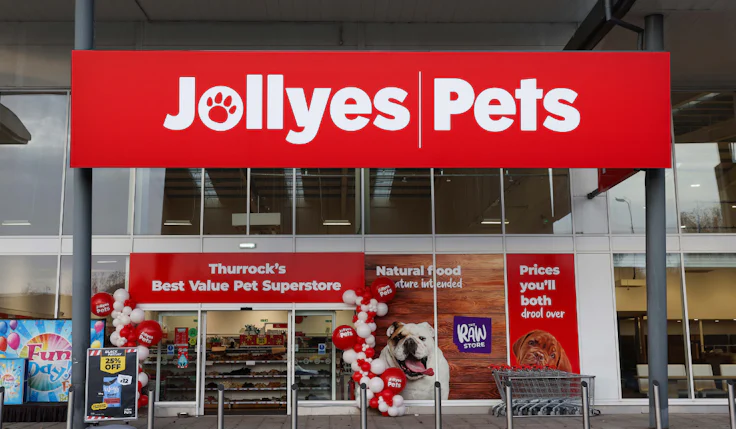
It’s a similar story in the UK. In 2025, UK retail media will only just surpass TV advertising, with the channel expected to grow by 18.3% to reach £4.598bn, followed by a 16.6% growth in 2026, reaching £5.4bn.
Meanwhile, TV is expected to grow by 0.9% in 2025 to £4.595bn, with stronger 3.4% growth in 2026 to £4.8bn, boosted by major sporting events such as the FIFA World Cup and the Women’s T20 World Cup.
“Even though we talk about the shift away from TV and into digital, things like streaming and places where you can still have that mass media impact are still very important,” WPP Media’s global president of business intelligence, Kate Scott-Dawkins tells Marketing Week.
WPP divides the commerce channel into three segments – retail, travel services and financial services media.
Travel companies such as Expedia, Booking.com and TripAdvisor and financial companies like Klarna and PayPal are particularly well placed, holding vast amounts of first-party data through loyalty schemes and regular logins that reveal who their customers are and what they want.
‘Like a startup’: Inside the rise of travel media networks
However, WPP notes that the proliferation of retail media networks in recent years is now facing consolidation pressures.
“We are likely going to see greater consolidation or partnering, potentially within this new AI checkout world,” explains Scott-Dawkins.
For example, more retailers such as Etsy are partnering with OpenAI to launch Instant Checkout within ChatGPT, allowing users to discover and buy directly from Etsy sellers within the chat interface, integrating AI shopping with real-world commerce.
“It could potentially lead to incremental sales, which is really beneficial for them if they’re being distributed more broadly via these AI platforms, but I think it does put a little bit of pressure on their on-site, retail media revenues,” she explains.
Meanwhile, advertisers are reducing the number of partners they work with to improve operational efficiency and focus spend on networks offering advanced measurement and attribution capabilities.
Brands want proof of effectiveness, more engaging creative and full-funnel solutions. It makes sense considering almost two-thirds (63.9%) of respondents to Marketing Week’s Language of Effectiveness study say the quality of the creative is one of the more influential factors in overall marketing effectiveness.
Incrementality measurement also remains the sector’s biggest challenge. While commerce media can provide closed-loop attribution, questions persist over whether advertising on these platforms generates new demand or simply captures existing purchase intent.
Speaking with Marketing Week earlier this year, Expedia Group’s senior vice-president of media solutions, Rob Torres discussed the challenges of measurement.
“The tough part of that is we have a very good sense of what [consumers] are doing when they’re on our sites. If they have touched our sites, then we can follow them pretty [well] and get a sense of where they’ve gone, but we don’t necessarily know if they converted elsewhere, unless somebody shares that back to us,” he explains.
‘Significant appetite’: Creativity and measurement’s role in the next stage of commerce media
In the UK, generative AI tools and self-serve platforms are lowering barriers for SMEs in traditional media.
Content advertising, including TV, audio, print, social/digital and gaming, is forecast to remain the largest category, accounting for 56% of total revenue in 2025.
TV’s 3.4% predicted growth in 2026 will largely be driven by streaming, which is expected to increase by 16.2% in 2026 to £1.8bn, representing 37.4% of total TV ad revenue, offsetting linear TV declines.
By 2030, more than half of all TV advertising is expected to come from streaming platforms. WPP also includes 15% of YouTube’s projected UK ad revenue in 2025 within streaming figures, reflecting increasing YouTube consumption on TV screens.
Elsewhere, audio advertising is projected to grow 2.8% in 2025 and 3.5% in 2026 to £668.2m. Digital audio, including podcasts, is expected to grow 8.1% in 2025 and 8.8% in 2026, with podcasts continuing to attract niche audiences with diverse content.
“Podcast consumption is increasing,” Scott-Dawkins notes, adding that despite growth, it’s not yet on the same scale as other advertising.
“Or it comes out of a complementary budget. And the measurement item is something that still gets brought up pretty frequently, so that’s another thing that’s holding it back a bit.”