TGJones’ prospects will depend on price, product and place
The high street chain kept all but the name from WHSmith and without a distinctive brand, promotion won’t mean as much as the rest of marketing’s four Ps.


Whenever I’m watching a particularly tense sports match with my kids, one of them will ask “do you think we’re going to win?”.
They want a clear yes or no answer, but my answer’s always the same, and it winds them up. “It’s possible, but that doesn’t mean it’ll happen.”
I feel the same way about the recent overhaul of the UK’s oldest brands. This wasn’t just any change either. This was a name-change moment, for a brand with more than 230 years of heritage and a permanent fixture on the UK high street.
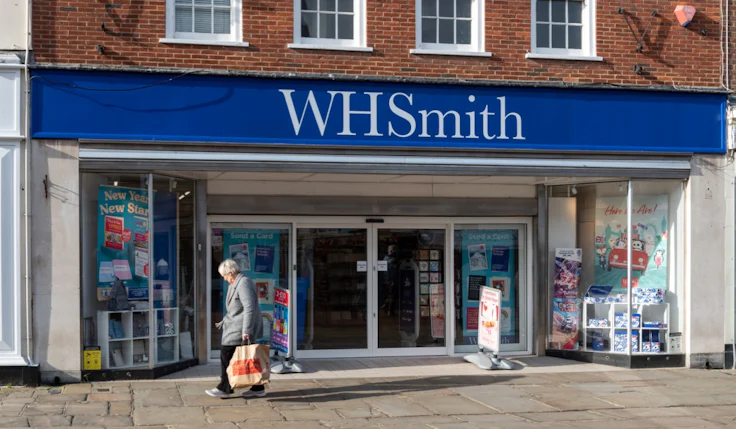
Yes, I’m talking about WHSmith, which just in time for back-to-school became – drumroll please – TGJones. Same blue banner, same white writing, same store-fronts and, on the face of it,- the same in-store experience.
While this has all the ingredients to join Twitter, Jaguar and Cracker Barrel in the pantheon of hot takes, I’m reluctant to cause any marketer a headache. Life for marketers is hard enough as it is.
So rather than a takedown I thought I’d attempt a breakdown and look at the questions we might need to ask before jumping onto the bandwagon. That way we can decide for ourselves whether this is the mutt’s nuts or a dog’s dinner.
Businesses with different trajectories
Let’s start where all good marketing should start. Not with the branding, but with the commercial and customer context. The simple nuts and bolts are that WHSmith, until last year, was a business of two parts: high-street stores and travel retail, with two very different commercial trajectories.
High-street stores were suffering like many high-street chains in the UK. Footfall decline, energy and wage inflation, rate rises – all were all huge headwinds that the business had struggled to overcome.
In contrast, travel retail had become the significant majority of revenues, and an even larger share of profit. It’s easy to see why; people in airports and train stations are a captive audience, without much choice of where to spend their time or money. (The pricing analysis of this loyal Haribo buyer anecdotally confirms WHSmith capitalises massively on the lack of choice.)
In the face of these dynamics, and with aspirations for growth, the company made the logical decision to offload the high-street stores and focus on travel retail. The high street is expensive, hard to get to, and most stuff can be found more easily and cheaply elsewhere, especially online.
So you focus your resources – time, energy, money – on the travel stores where you’re already making a decent wedge, and get rid of the risky, less profitable and harder-to-transform high-street stores.
The stores replacing WHSmith are operating with brand assets that borrow all their predecessor’s visual branding choices, except the actual name.
There’s a bit more nuance to it than that, but if you follow the money, those are the big moving parts, and for the business that still is WHSmith it makes good financial sense.
And what of the TGJones rebrand? Well, the first thing is that it’s not strictly speaking a rebrand. It’s the brand chosen for the new chain of stores created from the sale of WHSmith’s high-street outlets.
Viewed from that angle, WHSmith has already left the building – or at least the high street – joining the likes of Woolworths and Wilko as businesses that struggled to adapt to the change and challenge of modern UK retail.
It doesn’t feel like that, though, because the stores replacing WHSmith are operating with brand assets that borrow all their predecessor’s visual branding choices, except the actual name. (Imagine Aldi making Cuthbert the Caterpillar cakes, but with Marks & Spencer’s permission.)
How do we start to think about that decision, which looks, well, interesting? A useful question for framing open and productive thinking is: for this to work, what do we need to believe to be true?
Three key challenges for TGJones
It’s a good question because it encourages us to put aside our (natural human) instinct to spot risk and evaluate from a perspective of a positive outcome.
For TGJones to work, you need to believe that it can replace 230 years of brand equity built in the mind of UK consumers with something more effective.
If you’re convinced by that, then you also need to be convinced that the marketing beyond the look-and-feel can make up for the lack of change elsewhere and that the whole business can align behind it.
And, as ever, the people are as important as the plans, so you need to believe that someone, somewhere knows what they’re doing and is making it happen.
1. Brand equity
Let’s tackle these one by one. First up, marketing 101 tells us people don’t care about brands. They’ve got much more important things to be doing with their lives.
In the same way people are still referring to X as Twitter, consumers will unconsciously be saying “I’ll go and get that from WHSmith” for years after the name change. This is why today people are still going into WHSmith – sorry, TGJones – on the high street every day.
The name changed and yet still people come through the doors, looking for the things they know they can find there. Marketers might have gone “TG huh?”, but most normal people couldn’t care less. They will, as they nearly always do, carry on regardless.
That level of mental availability is gold dust – to know that you can change your brand name and that shoppers won’t change their shopping habits.
Three ways brand building is similar to compound interest
That’s what being around for 230 years does for a brand, and so ‘borrowing’ the heuristics from your predecessor has an element of cunning about it. For a while. And then what?
The memories and associations that create mental availability need to be consistently refreshed in order to be effective. That’s what a brand is – the accumulation of memories and associations built up in the mind – and, broadly, the WHSmith brand in the mind of the UK consumer will be something like: “A bit of a go-to shop for books, magazines and stationery. And travel bits when I’m on the move. It’s pricey but there’s often no alternative. And the stores are nothing special, more about convenience than anything else.”
It’s not the most inspiring thing, but for the WHSmith brand – now focused on travel retail – that’s OK, because as we’ve already seen, it has the physical availability sown up.
For TGJones it’s a lot more challenging. What does it stand for? Well, right now, nothing beyond the borrowed equity of its predecessor. We know that because it has only existed for a nanosecond, so there are, as yet, none of the mental associations that make a brand. There are no memory structures to refresh.
And because TGJones has chosen brand assets that are so similar to WHSmith’s it’ll be difficult to develop its own distinctive position. It can’t, for example, run a sales-driving campaign saying ‘All your back-to-school essentials available at TGJones’, or drive awareness of its ‘hub on the high street’ position without begging the question: “TG who?”
But before we totally write off the branding decisions, let’s remember that marketing is about way more than just communications and look-and-feel. There’s plenty of scope for improved performance and brand building outside of advertising and logos.
2. Price, product and place
So, to question two. In order for TGJones to work, you need to believe that the marketing is making up for the lack of change elsewhere, and that the whole business can be aligned behind it. Is it?
It’s sad how many people outside the marketing department are surprised that there’s more to marketing than what things look and feel like (and it’s horrifying how frequent that is within marketing teams themselves). But there are four Ps, and TGJones has plenty of scope to build the brand through product, price and place before getting to promotion.
So you think you’re a marketer? Prove it
The footfall won’t dry up instantly. People are still walking up and down the UK high street every day. So what are they looking for, and how do you meet those needs?
To break down the other three Ps, simply: what is the range and mix of products on offer, what prices are people being asked to pay and in what places can you access them? And from a strategic perspective, who is the customer, and how does the combination of those three Ps service their needs as well as demonstrate what TGJones is?
This needs to be more than a new-name-and-logo job.
On the face of it (being generous, and accepting that I’ve only been into a few stores) this is a work in progress. The product mix seems to be the same as it was before, pricing is, well, a bit pricey, and the store experience is still labyrinthine.
And things do need to change. We know the status quo isn’t good enough because these underperforming stores were put up for sale in the first place, and because the price they were sold for was knocked down in the purchase process because of diminishing performance.
This needs to be more than a new-name-and-logo job.
At the height of Tesco’s troubles, Dave Lewis, then CEO, said “you can’t advertise your way out of a problem you’ve behaved your way into”. It’s good advice, and you can’t rebrand your way out of trouble either.
To give TGJones the benefit of the doubt, it has only existed for a few weeks. Changing retail environments is an arduous task, an expensive one and, given the importance of people to the retail experience, it is a culturally unique challenge. But with the right plans and people it’s possible.
3. Strategic clarity
Which brings us to our final question. In order for TGJones to have a successful future, you need to believe that someone, somewhere knows what they’re doing and is working on making it happen
The high street in the UK is tough. Like, crazy tough. Woolworths and Wilko showed that being a big old brand on the high street is hard enough, let alone a ‘new’ brand sitting in the shadow of the one it’s replaced, in an environment where high business rates, increasing staff costs and price pressure make even small margins hard to come by. But is it possible?
With some rigorous customer understanding, good commercial clarity, a kickass-simple strategy and brilliantly distinctive positioning, I do believe there’s a place for a generalist retailer to survive on the UK high street.
There are still people visiting town centres, with places to go, errands to run, kids to occupy, things to buy – ‘category entry points’ and ‘missions to complete’, if you like.
So the ‘hub on the high street’ positioning, which TGJones talks about in corporate comms, isn’t a terrible start point and the decision to leverage concessions – like Toys R Us and Post Office – feels like a sensible way to step towards that opportunity.
TGJones can survive, but can it thrive?
Personally, my hunch is that it would have been a lot cleaner to go all-out for a launch of a totally new proposition. Externally, the business could capitalise on a ‘new to the high street’ moment, and internally it could be galvanising for teams and store colleagues.
Brands survive and teams thrive on clarity and simplicity, and it just feels too confusing to be neither one thing nor another. New, but old. Different, but the same. No longer WHSmith, but not entirely not WHSmith.
But that’s a hunch, and without actually seeing the strategy, it’s hard to really know what TGJones is up to. Judging the strategic chapters by what is visible on the cover is a game of guesswork. There are clues, but not much evidence or motive.
So, is it possible for TGJones to survive? Sure.
Is there a world where, in five years’ time, it’s a part of the high street which people regularly visit, selling everyday stuff and services the community needs, and doing it in a way which makes the business money? Sure.
Is there a world where that has happened and people aren’t still thinking that they’re walking into WHSmith? I doubt it.
But if TGJones finds a way to become a high street survivor through product, price and place, while struggling through on borrowed equity from its past, that might be a reasonable success in the current climate. Is that sustainable? We’ll find out.
It would have been a lot cleaner to go all-out for a launch of a totally new proposition.
I think perhaps the bigger questions for TGJones are going to be asked outside of marketing.
Its new owners might well be wondering, having bought this retail footprint for £40m, is there an easier way to make back more than we put in, rather than managing the difficult turnaround process of a business in a struggling sector, which looks almost identical to the one which was struggling when we bought it? And they’d be right to ask that; launching a new brand on the high street is a resource-intensive gig.
As an over optimistic marketer, I’d love to see the marketing story play out positively. I’d love to write the story where TGJones has done something transformative. The one about how a high-street chain can be regenerated through some brilliant marketing-led thinking.
Can TGJones replace 230 years of brand equity built up in the mind of UK consumers with something equally or more effective?
Can the marketing being done beyond the look-and-feel make up for the lack of change elsewhere, and can the whole business align behind it?
Is it possible that someone, somewhere knows what they’re doing and is working on making it happen?
Having gone through these questions, I come back to the same question my children ask me when we’re nine wickets down, needing 30 runs off the final over.
Are they going to win? It’s possible.
Johnny Corbett is an independent marketing specialist who has worked in leadership roles for large corporate businesses, startups and agencies.