‘Fight for attention’: Asahi’s global CMO on its drive to be distinctive and consistent
Distinctiveness drives the ability for brands to cut through the noise facing modern consumers, says Asahi Super Dry’s global CMO as the brand launches a global platform aimed at creating a consistent identity.

 With so many things fighting for consumers’ attention, it is more important than ever that brands have a “distinctive point of view”, says Asahi category and global brands CMO Malgorzata Lubelska.
“We are fighting for attention, not only with other beer brands. We are fighting for attention with celebrities, with media channels. There is so much information coming our way every second,” she tells Marketing Week. “We have to be distinctive. We have to be recognisable.”
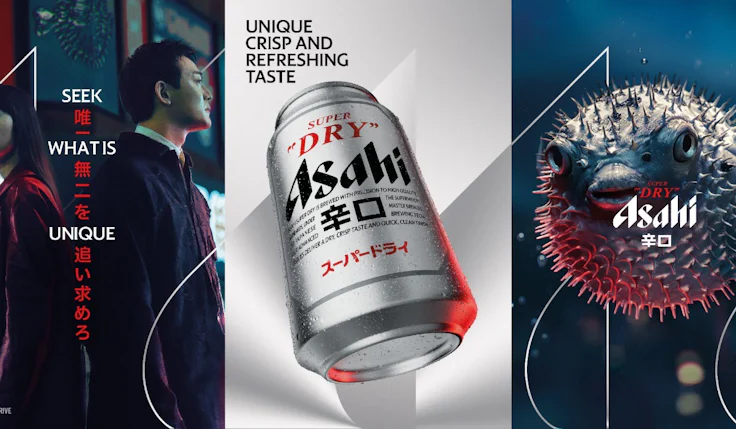
Asahi Super Dry is today (13 October) launching a new global platform, designed to drive that global, consistent and distinctive positioning for the beer. Created with agency partner Havas London, the ‘Seek What is Unique’ platform emphasises the “unique liquid” as well as its Japanese roots, a culture full of “modernity rooted in tradition”.
When you look at the brands that are truly successful over time, consistency is really key.
Malgorzata Lubelska, Asahi
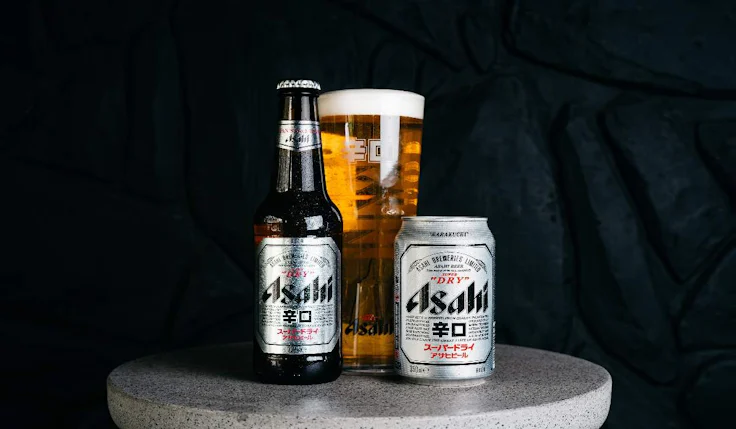
The brand has also unveiled a new design system, intended to introduce consistency for the brand globally. Lubelska says this will help Asahi “own” its colours of silver, red and black, and ensure that consumers instantly recognise the brand.
“We want to create those memory structures, whether you see it on social media, you see it on the billboard, you see it in your local pub, you instantly recognise that this is Asahi Super Dry,” she says.
That distinctive identity that means consumers instantly recognise your brand is “the foundation of modern brand building”, she asserts, pointing to brands like Mastercard and L’Oréal as examples that successfully achieve this.
This kind of distinctiveness is only achieved over time. It takes years and even generations of marketers to build consistently to achieve. Lubelska describes Asahi as being “at the beginning of a long-term journey” that it believes will help it achieve that distinctiveness.
“I’ve seen marketers get bored with their own work, and the leadership changes, and there is a new marketing team, and they want to change everything. But actually, when you look at the brands that are truly successful over time, consistency is really key,” she says.
Her aspiration for the brand is that it can join the ranks of brands known for their distinctiveness, driven through long-term consistency.
‘A jewel on our hands’
The decision to launch this platform comes from the “global ambition” that the business has for Asahi Super Dry. This “new vision” for the brand has come as Asahi Europe starts a new chapter, says Lubelska.
She references the creation of a new commercial growth function for the business, which also owns brands including Peroni, Grolsch and Cornish Orchards, as well as Asahi Super Dry, as something ushering in a new era for the business. Lubelska joined the global team in 2024, and has been helping to drive forward a renewed agenda of “modern brand building”.
The business saw an opportunity to “accelerate” Asahi Super Dry, she says. The business sees premium beer as a space of potential for the company, with this being the part of the beer category experiencing growth. As an existing premium beer, Asahi is well positioned to further lean into this area.
“We have a jewel on our hands,” says Lubelska.
‘Healthy friction’: Asahi’s growth chief on bringing together different functions
Consumers globally are drinking less, but they are drinking more premium, she says. The idea of what premium means has also changed somewhat, she asserts, from “status” to “having interesting, unique stories”. With its roots in Japanese culture and its unique liquid, Asahi Super Dry is well placed to tap into this trend, she says.
Beer, and lager in particular, is a highly competitive category. When it comes to assessing the success of the new brand platform, value market share will be a key metric, says Lubelska.
“That’s super important, because that is the power of the brand to create the value, and the metric of market share gives us the sense of whether we are growing faster than competitors,” she says.
Brand metrics will also be a crucial measure of success for Asahi on this platform, in particular, the relevance of the brand and its ability to make it into consumers’ repertoires.
We want to make moderation cool.
Malgorzata Lubelska, Asahi
“There is a huge, intense, competitive set in the beer world and in this alcohol beverage space, so we have to fight for mental availability and relevance. To even be in the consideration set is already a big achievement,” Lubelska says.
As well as the premium segment, no and low has been an area of growth for beer in many markets. Asahi Super Dry 0.0% is a crucial part of the business’s ambition to offer consumers choice. However, it also wants to drive forward moderation as a whole.
“We want to make moderation cool. So it’s acceptable now to drink no alcohol beer, which maybe was not the case a few years ago because respected brands like ours, we are creating advertising which is making no alcohol beer aspirational,” Lubelska says.
The beer also allows Asahi to drive partnerships in different spaces, for instance, sports. She gives the example of Manchester City, a football club that has Asahi 0.0% as its training kit sponsor. The non-alcoholic beer allows the brand to play more prominently in the important “passion point” of sport.
A global effort
The intention is to roll out the Seek What is Unique platform globally; it is launching today in two markets, the UK and Australia. Creating the work took global collaboration across different markets, with all the core markets coming together in Tokyo.
In particular, the team worked closely with their Japanese colleagues to ensure the continued “authenticity” of the brand through the new platform, which had to work across global markets.
“While modern Japan is an interesting concept and relevant, how do we express it to be relevant in Australia, the UK, the US, but also China and the other Asian markets that can be really, really different,” says Lubelska.
Having worked closely with the global teams as well as its partners at Havas, Asahi has settled on a platform that it believes can help it go the distance.
“I believe we are creating the creative platform which allows us to have a strong, distinctive voice for the brand, a distinctive point of view, a distinctive identity which is consistent globally, while being flexible enough to allow for local relevance,” she states.