‘Nourish the brand’: How car marque Geely plans to drive long-term success in the UK
As the Chinese EV brand launches in Britain, its CMO suggests the UK car market is now “very receptive” to new players.
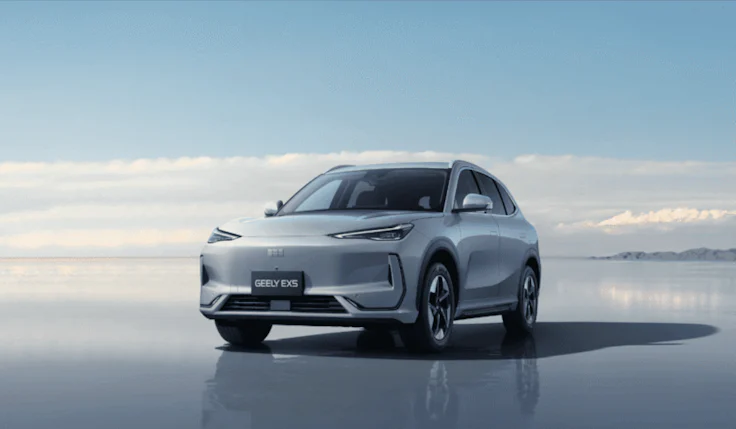 Chinese car manufacturer Geely has a job on its hands as it enters the UK market. Not only is it launching a new electric vehicle into an already crowded market, it is also looking to introduce a new automotive brand to a country where consumer loyalty to long-established names runs deep.
For Mark Blundell, Geely UK’s recently appointed CMO, the ambition is measured but direct. “Ultimately, we want to be established as a key automotive brand in the UK,” he says. “A mainstay of the market, instantly recognisable, where people know who the brand is and what the story is.”
Having spent his entire career working in automotive, most recently on the launch of rival Chinese EV brand BYD in Britain, Blundell is not new to this kind of task.
But given the landscape has changed so much over the past five years, particularly given the shift to EVs, he believes the timing is more favourable for new players than it might have been a decade ago.
“With the advent of new-energy vehicles, there’s a high propensity for people to try new brands, new vehicles,” he says. “The market is very receptive now to the overall proposition we’re able to offer.”
The trick is making sure the brand is nourished, realising it’s a long-term payoff.
Mark Blundell, Geely UK
He also believes heritage brands have a lot to learn from challengers, as the landscape grows ever-more competitive. “Just because you’ve been established for 175 to 200 years, doesn’t mean you can’t still have an energy and a spirit about what you’re doing,” says Blundell.
At Geely Holding Group, which also holds major stakes in Volvo, Polestar, Lotus, and Proton, the immediate priority is establishing its EX5 SUV model in the UK while expanding Geely’s retailer network and media presence. Within the next year, three additional models will join the range, so several product launches and a parallel effort to build a coherent brand identity will be required.
That balance between short-term sales activity and long-term brand work is something Blundell describes as a constant juggling act.
“Launching new products will definitely achieve you success in the short term… where you need the brand power to kick in is once you’re a bit more established,” he says. “The trick is making sure the brand is nourished, realising it’s a long-term payoff.”
How Audi UK goes against category conventions to avoid the auto industry’s ‘biggest dangers’
Where to spend
For now, the majority of its budget is being spent on digital media, with larger-scale campaigns to come once the brand’s footprint grows. “We have this challenge of: when do you go national when you don’t have a national footprint?”
Visibility is also being driven through events, where potential customers can encounter the cars directly. At the EveryElectric show in Camberley, for instance, Geely decided to exhibit with just three weeks’ notice.
“People can sit in the car, drive the car, compare it against direct competitors,” Blundell says. “It works really well for customers who want a no-pressure experience of what’s out there.”
Social media is another focus. “The amount of activity is relentless… you need to be present in all channels, with a different tone of voice depending on the platform,” he says. “It’s a really important role for the brand’s health and growth.”
Asked when the launch phase will end, Blundell points to visibility as a key measure. “A tipping point is when you start to see multiple models of the same brand in your environment on a regular basis,” he says.
Beyond awareness, the next test will be loyalty, which Blundell says will come from ensuring product quality.
His approach to advocacy, something he calls “plus-one marketing,” relies on word-of-mouth rather than spectacle.
He explains: “If I bought a Geely EX5, people say: what’s that? Why did you buy it? Come and have a sit in it… Eventually somebody else is exposed to your content. Those plus-ones become the people more engaged and interested.”
BYD on why TikTok is now a ‘permanent part’ of its always-on strategy
A career of launches
Blundell’s outlook has been shaped by three decades in automotive, nearly all of it inside the Stellantis group. He began at Peugeot, where an early secondment as a dealership marketing manager gave him an understanding of how strategy translates on the ground.
“It really is the sharp end of the whole brand-building piece… my job was to leverage what the brand was doing and turn it into performance and action,” he recalls.
Later, as head of product, he oversaw major launches during Peugeot’s model refresh cycle, which deepened his grasp of positioning and communications. That role led to the creation of DS Automobiles, where he spent six years steering the new brand through launch, maturity and the challenges of the Covid period.
“In those days it was really rare to launch a car brand… I felt very privileged and lucky,” he says.
He has gained experience beyond marketing too, with stints in roles from logistics to running a leasing business, which he says have broadened his knowledge of how manufacturers operate. “If you understand logistics, accounts, finance […] it really helps you in the long term,” he says.
The amount of activity is relentless… you need to be present in all channels.
Mark Blundell, Geely UK
Through it all, a focus on execution has remained. “Speed of execution… making sure we’re using every minute effectively,” he says.
“I liken it to a race: how fast are we moving down our lane? Can something be brought forward? Is it aiding the customer? Is it aiding the brand?”
It’s an approach that feels suited to the current automotive landscape, as defined by rapid change, tighter budgets and shifting loyalties. For Geely, the opportunity is real but far from guaranteed.
As Blundell puts it: “We have the right ingredients. Now it’s just a case of deploying and making sure we work through it.”