Carlsberg Britvic’s CMO on driving a ‘bigger, bolder’ vision for the beverage category
The unified beer and soft drink business is well-positioned to tap into a “blurring” of its categories, says CMO Munnawar Chishty.

 When two businesses come together, the aim is always to make the combined company stronger than the sum of its parts and propel its merged portfolio of brands towards growth.
Carlsberg Britvic was formed earlier this year following the former’s acquisition of the latter. The deal unites Carlsberg’s global beer brands with the UK-based soft drink company’s portfolio.
The two businesses were brought together to create a “multi-beverage powerhouse”, says Carlsberg Britvic CMO Munnawar Chishty, who took on the role having headed up marketing at the soft drinks business since 2023. It allows the joint business to get the “best of both to create something new”, she adds.
Bringing both sets of brands together allows Carlsberg Britvic to have a “bigger, bolder vision” than it did when it existed as two separate businesses, she explains. In particular, it can become a provider of beverages for all occasions.
We can start thinking quite disruptively around our portfolio now.
Munnawar Chishty, Carlsberg Britvic
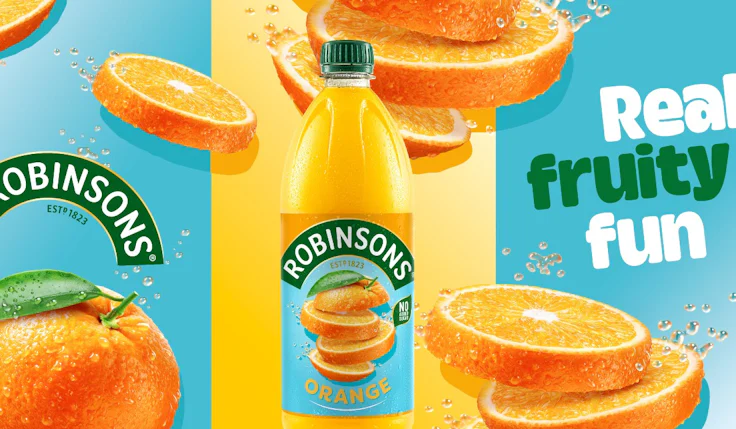
As well as Carlsberg itself, the Carlsberg Britvic business encompasses alcohol brands including 1664, Somersby, Marston’s and Birrificio Angelo Poretti. On the Britvic side, brands include Robinsons, plant-based drink Plenish, and Tango, as well as producing, distributing and marketing many PepsiCo brands.
The breadth of this portfolio means that the combined Carlsberg Britvic business can now offer a beverage for almost every occasion, notes Chishty.
“We’re able to take consumers from breakfast through to dinner, through multiple need states, wellness, hydration, experience, socialising, and we can cover children all the way through to older people,” she says.
The company can now engage customers and consumers in conversations around all of those different occasions and need states, as opposed to being confined by the soft drink or beer category.
Thinking disruptively
As well as offering a wide breadth of brands, Carlsberg Britvic is set up to cater to changing consumer habits around beverages.
“We can start thinking quite disruptively around our portfolio now, whereas before we were soft drinks, and then they were beer, now I can go actually, there is a blurring going on where people are looking for more interesting drinks,” Chishty says. “They’re not necessarily beers and they’re not necessarily soft drinks. They’re in the space in the middle.”
Whether that’s through the growing popularity of moderation, or trends like “zebra striping”, where drinkers will alternate between alcoholic beverages and non-alcoholic drinks, consumers are drinking differently than how they did in the past.
Having only been formed in January, the company is just at the start of tapping into that “blurring” between the categories of soft drinks and beer.
Carlsberg’s CMO on marketing’s imperative to drive growth
As with any portfolio business, it is essential for Carlsberg Britvic to understand the role each of its brands can play, ensuring they each find their own white space to generate growth for the wider business. It was therefore important for the newly merged business to do some portfolio work as a priority, Chishty notes.
This saw it work out how to “prioritise” the brands best-placed to grow and accelerate in the coming years.
“The intent behind that was to clarify the role each brand played but also clarify the future opportunities around those brands as well,” she says. “So, some of those brands can absolutely play in some of the blurring spaces, others, not necessarily. Some of those brands can lean more into health and wellness, others, not so much.”
The business looked at the category, the consumer and then looked at its brands and the opportunities they each had.
“Otherwise, we could be just chasing everything [..] But we’re really clear around the brands where we think we can win,” Chishty says.
One example she gives is non-alcoholic beer, which is a rapidly growing category, particularly among younger adults. There’s clearly an opportunity there; however, it’s important the business chooses which of its brands are best placed to go after it, she says.
Earlier this year, Carlsberg Britvic launched its 1664 Bière 0.0%. This made sense for the brand due to its existing premium positioning and ability to tap into market trends, notes Chishty.
Budgeting in the new business
When Britvic was a standalone business, Chishty, then marketing director for GB, successfully made the case for 30% more marketing investment in the business. She saw “untapped potential” and believed that stepping up budget could be the “unlock”.
That year, Britvic reported its “best ever” financial performance, suggesting that the extra budget was wisely invested and did indeed work to unlock untapped growth.
So Chishty is no stranger to optimising marketing budgets, and now she must do this across an even bigger portfolio.
Defining the roles of each brand in Carlsberg Britvic’s portfolio was the first way it was able to plan its budgeting strategy, with this helping to set “guardrails” around investment levels based on portfolio strategy.
Positioning brands as a ‘powerhouse’ of growth: How marketing at Britvic secured 30% more investment
Another way that Carlsberg Britvic ensures it is investing adequately across its brands is through media sufficiency work. This was something the beer business had previously and has brought into the new unified business. It determines the minimum level of media investment needed to drive outcomes.
“That really helps when I’m having budget conversations […] that is a concrete way of going, well, this is how we’re investing, and this is how we should be investing,” Chishty says.
The business is also continuing to use MMM (media mix modelling) as well as test and learn experiments to help ensure it invests across its business in a way that best sets brands up for growth.
Tools and techniques from both sides of the business are coming together to help determine how Carlsberg Britvic invests in marketing budget, but the strategy is ultimately driven by portfolio plans, says Chishty.
Shared lessons
As well as brands coming together as part of Carlsberg Britvic, people are coming together, giving a chance for an exchange of knowledge across teams.
For example, Carlsberg has more global teams, meaning the combined business is working out how to best leverage those teams. Each business also has different trading expertise, with the soft drinks side learning more about the on-trade and beer learning more about the off-trade.
How Carlsberg looks at its P&L is also slightly different, and so the team is adjusting its approach accordingly. Speaking the language of finance is important for any marketer, as is adjusting to new dialects, like a different approach to the P&L.
Looking to the future, Chishty says she needs “amazing brand builders” who can drive impactful innovation rooted in insight and who can continue to tell stories in a changing media landscape.
“All of that hasn’t changed as a result of this merger,” she says. “All it has done is open up opportunities to accelerate some of that.”