LVMH reverses decline with plan to invest in brand ‘desirability’
Remaining confident despite the luxury slowdown, LVMH has “self-help” measures planned spanning creative renewal, innovation and retail upgrades.
Luxury group LVMH has returned to growth amid strengthened demand in key markets, as its flagship brands benefitted from new creative direction and refreshed retail concepts.
Third quarter sales rose 1% to €18.3bn (£16bn), the company’s first quarter of growth this year. Q3 marks a turnaround after a softer first half, with revenue for the first nine months down 2% on an organic basis to €58bn (£50bn).
The third quarter saw improvement across all LVMH business groups and regions with the exception of Europe, where revenue from tourist spending declined due in part to currency fluctuations.
CFO Cécile Cabanis said the business had seen “pockets of improvement across all divisions”, but cautioned the final quarter would bring tougher comparatives, particularly in Asia and the US.
“Our priority is to continue investing behind the desirability of our brands, behind retail, execution and quality. That is what matters in the long term,” she said.
LVMH CFO: ‘Efficiency is sustainable, cost-cutting is not’
Cabanis said the group would continue to prioritise brand investment despite a slower growth environment.
“Some people cut investment to protect margin. It can work short-term, but it’s not the right call for long-term performance,” she stated.
Fashion and leather goods, LVMH’s largest division, generated €27.6bn (£24bn) in revenue in the first nine months, down 6% organically. In the third quarter, sales were down 2%, but improved sequentially in nearly all major regions.
According to Cabanis, the rebound was driven by traffic and volume rather than price, which remained largely stable.
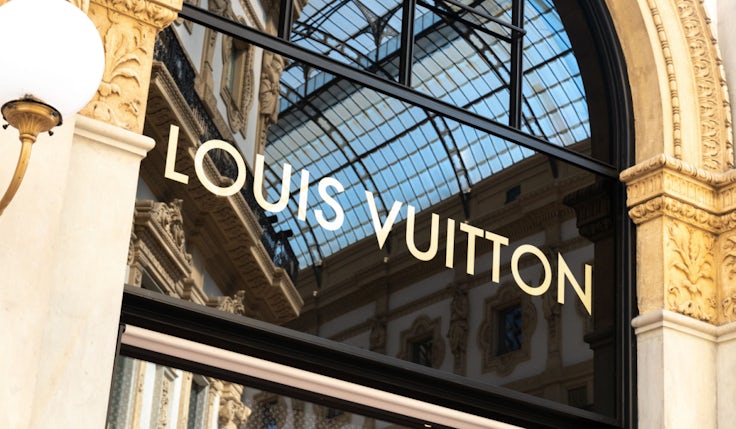
Louis Vuitton continued to anchor the portfolio with high-profile initiatives, including a fashion show from men’s creative director Pharrell Williams at the Centre Pompidou in June. The business also highlighted the opening of ‘The Louis’, a “museum-like space in the form of a cruise ship” located in Shanghai, which has quickly become one of the brand’s top-selling stores for luggage.
The launch of beauty collection Louis Vuitton Beauté in August marked the fashion house’s entry into colour cosmetics – at a luxury price point. Lipsticks in the range start at £120 and eyeshadow palettes at £190, while a brush set costs £860. LVMH described the make-up launch as a “major success”, with an “exacting focus” on “composition, innovation and sustainability”.
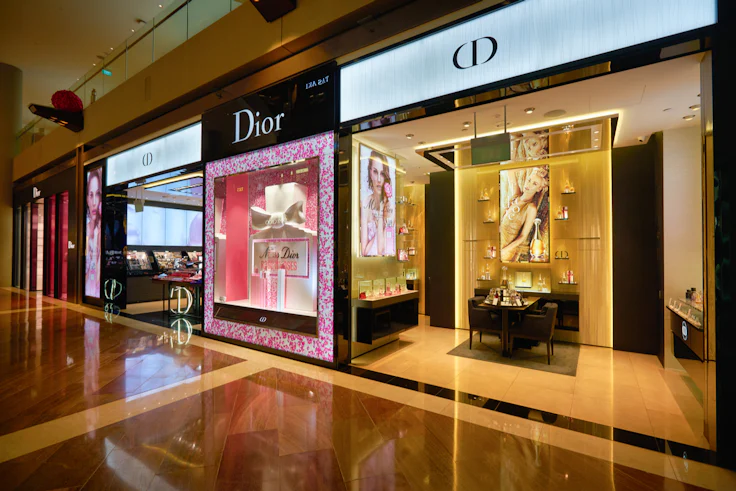
Christian Dior introduced its first men’s and women’s collections under Jonathan Anderson and opened major flagship stores in New York and Beverly Hills, alongside the launch of the Diorigami jewellery collection by Victoire de Castellane.
Other houses including Celine, Loewe and Givenchy showed debut collections from new designers, while Maria Grazia Chiuri was confirmed as chief creative officer at Fendi.
Confident tone
Looking specifically at retail, beauty business Sephora delivered strong like-for-like gains across regions, boosted by the record launch of Rhode, the skincare brand founded by Hailey Bieber. The retailer also expanded its Sephoria events to Shanghai, Paris and Dubai.
Cabanis dismissed comparisons with online competitors, saying Sephora’s model is built around discovery and destination stores, rather than price competition.
The watches and jewellery category notched up 2% organic growth during the third quarter. Tiffany & Co. reported double-digit growth in its core jewellery lines and record high jewellery sales. Around 30% of its store network has now been renovated, with new flagships in Tokyo’s Ginza district and Milan outperforming older formats.
Perfumes and cosmetics grew 2% over the quarter, supported by launches at Dior including Miss Dior Essence and Rouge Dior On Stage. Guerlain, Maison Francis Kurkdjian and Benefit contributed to growth across fragrance, skincare and make-up.
Wines and spirits returned to growth at 1%, as Champagne and rosé wines offset weakness in the Cognac portfolio.
LVMH: If we just meet the customer needs, we are dead
LVMH highlighted the role of local consumers in driving sales. Mainland China returned to positive growth in the quarter, with mid- to high-single-digit gains. However, tourist spend by Chinese customers remained down double digits.
Asia accounts for 27% of the company’s sales, followed by Europe (26%), the US (25%) and Japan (8%), with 14% of sales generated by ‘other markets’.
The company expects to benefit from what it describes as “self-help” measures, including creative renewal, product innovation and retail upgrades. Upcoming projects include the opening of a Louis Vuitton flagship in Ginza, Tokyo, and further iterations of the Louis concept in other Asian cities.
LVMH expects a more favourable base of comparison in the first half of 2026, when new collections and retail concepts will reach the market. Management acknowledged currency headwinds and uneven demand across regions, but struck a more optimistic tone than in the first half.
“Q3 shows quite a few positives beyond the comp base,” Cabanis said. “We’re confident while conscious of a macro environment that remains volatile.”