Guinness on using its London ‘brand home’ to ’embrace’ new and existing consumers
Guinness is confident its new brand home in London can act as a recruitment driver for the brand, as well as bringing existing consumers closer.

 Guinness will use its new London brand experience to “embrace people into the brand”, as it remains confident in its growth potential, despite now being Britain’s best-selling pint.
The Guinness Open Gate Brewery opens to visitors in Covent Garden later this week and is the Irish beer’s fifth “brand home” globally, as well as the first brand home that parent company Diageo has opened in London. The £73m experience is a working microbrewery where visitors can tour, taste specially brewed beers, enjoy restaurants and shop Guinness merchandise.
One of the core aims of the experience is to recruit new drinkers into the brand, says Deb Caldow, Guinness marketing director, speaking to Marketing Week at the venue ahead of its official opening on Thursday.
“Good looks like being able to embrace people into the Guinness brand,” she says, speaking about what success will look like for the Covent Garden experience.
What we’ve found in other brand homes is that people who are new to the brand often come with people who love the brand.
Deb Caldow, Guinness
It might be surprising to some that a visitor experience like the Open Gate Brewery, which requires consumers to go and visit, can act as a recruitment tool. The brand points to the Guinness Storehouse in Dublin, where the stout is brewed. That location has welcomed over 25 million visitors since it opened 25 years ago, and every fifth visitor to the Brewery has their first pint of Guinness there.
“What we’ve found in other brand homes is that people who are new to the brand often come with people who love the brand,” Caldow says.
The experience is also designed to cater to those who already love Guinness, she notes, adding that this is unusual for Diageo, which will normally be very “single-minded” about goals for initiatives. However, with this experience, the brand feels it can “put [its] arms around” both new and existing consumers.
Indeed, the brand has found that, among consumers who visit existing brand homes, it sees around a 90% uplift in penetration until up to four weeks after the visit. That means after visiting a brand home like that in Dublin, or indeed the other Open Gate Brewery experiences in Baltimore and Chicago, consumers will go on to try Guinness in other locations, potentially inspired by their visit.
Headroom for growth
Guinness sees its new Open Gate experience in London as a chance to recruit and engage existing lovers of the brand, and that’s a brand fanbase that seems to have grown considerably in recent years.
Globally, Guinness has seen double-digit growth each of the past of four years. More locally, one in every eight pints in Great Britain is now a Guinness, the company reports, and in London, that figure rises to one in seven.
You only have to walk around central London to see the popularity of Guinness in action, with pints of the black and white stout seen outside famous spots like The Toucan and The Devonshire.
Speaking during a media panel at the venue, Grainne Wafer, Diageo global category director for beer, vodka, liqueurs and convenience, noted that there was once a time when a pint of Irish Guinness was put on a “pedestal” in terms of quality, but this has changed, with many pints of Guinness poured in Great Britain now measuring up to the best quality in Ireland. Quality is something the GB team has been investing in, including equipping the on-trade with the right skills to pour.
Guinness boosts appeal among women and younger drinkers to fuel success
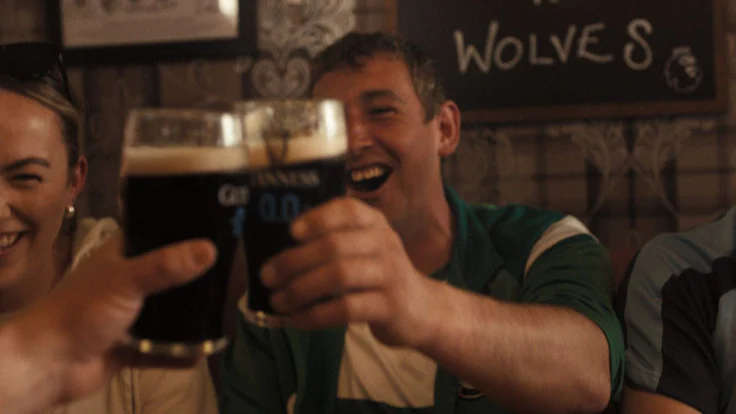
This has been one factor in the growth of Guinness in Great Britain, as has the brand’s ability to expand into traditionally harder-to-reach segments for beer, including women and younger adults. Its alcohol-free stout, Guinness 0.0, has also been a strong growth driver for the brand in the UK.
Guinness saw such popularity last year, that the brand actually experienced shortages (something it insists it won’t see again this year). There are 5 million Guinness drinkers in the UK, Caldow says; however, there are 25 million beer drinkers overall.
“As a marketer, you look at that total addressable market, and you go, there’s loads to go,” she says.
While the Guinness team has worked to get the brand to where it is today and drive that impressive growth, there is also something inherent in the brand that makes it “inclusive” to different consumer groups, and able to lean into different spaces, whether that’s sports or fashion partnerships. Those fashion partnerships are on display in the Open Gate’s retail spaces, which showcases Guinness’s collaborations with the likes of Lazy Oaf and JW Anderson.
“It’s a brand that has never tried that hard to be cool,” Caldow asserts, adding that much of its relevance comes from leaning into the sense of tradition and heritage on a brand where the marketers who work on it have a real sense of legacy.
A more ‘holistic’ connection with consumers
Guinness has a long history in London, with the first pint of the black stuff having arrived in the city over two centuries ago. The Open Gate Brewery location will not be brewing actual Guinness, instead limited-edition craft beer and seasonal specials will be created on-site. The stout itself will contain to be created at St. James’s Gate in Dublin, where the Storehouse is also based.
While Guinness was maybe once associated with Irish pubs and St Patrick’s Day, its appeal as the UK’s number one pint clearly goes much broader than that.
Caldow says that when consumers buy into Guinness, they’re buying into the “warmth” of Irishness and a “mindset”. Diageo sees its brands as being global with a “local heartbeat”.
How Guinness became Britain’s most popular pint
This goes for how its brand homes operate too, with Guinness seeing the Covent Garden opening as an expression of its confidence in London’s hospitality scene. Indeed, Caldow says another marker of success for the Open Gate experience will be coalescing the community around it.
The site is smaller than the Dublin centre, which welcomed 1.65 million visitors in 2024, but Guinness’s ambition is to grow it to become a top five visitor destination in London, with it aiming to attract 500,000 visitors in its first year.
The brand of course has its own KPIs for success of the site, with awareness and talkability being some of the key measures. It also allows Guinness to get close to its consumers in a way that buying a pint at a pub or in an off-licence does not allow.
“We’ll be able to get, through here, a much better understanding of visitors […] a more holistic view of consumers,” notes Caldow.