British brands are missing out on $10bn of value, study finds
HSBC has overtaken Vodafone as the UK’s top brand, according to Kantar’s BrandZ ranking of the UK’s 75 most valuable brands.

UK brands are back in growth for the first time in three years, but they continue to lag behind their international peers in terms of brand value growth, according to new data.
Kantar’s BrandZ ranking of the top 75 most valuable UK brands, finds British brands are missing out on $10bn (£7.4bn) of value. This is because brand is contributing to only 29% of the total company value, compared to 33% for global brands.
This coincides with analysis from Kantar and the University of Oxford’s Saïd Business School, which finds companies that have particularly strong brand equity deliver abnormally high share price returns and have greater resilience to crisis and uncertainty.
Looking at the BrandZ data, which is based on a mix of financial and brand data, as well as the “contribution of brand equity to overall value”, Kantar concludes that UK brands are struggling to “differentiate themselves from the competition”.
Jodie Gillary, Kantar’s head of brand activation at Kantar Insights UK & Ireland, says by failing to “disrupt” as much as their global peers, UK brands are falling behind, with a lack of brand building leading to a decrease in value.
“If you’re not building your brand, you’re leaving money on the table,” says Gillary.
“It’s really important for brands to not just focus on short-term activation, like promotions, because they’ll drive volume up in the short term, but it’s only investment in brand building that’s going to drive that long-term growth,” she adds.
If you’re not building your brand, you’re leaving money on the table.
Jodie Gillary, Kantar
According to Kantar, disruption within a category has been responsible for 71% of incremental brand value growth for the top 100 brands globally since 2006, which represents $6.6trn (£4.9trn) in additional value, but UK disruptor brands are down 19% in value since 2019.
Gillary tells Marketing Week that brands need to lean into disruption and “consistency” as long-term marketing tactics to build up differentiation and close the value gap, citing both of these as “twin engines” for global growth.
“We’re just not as brave and bold,” she adds, claiming that UK disruptor brands are “declining in value” due to being “complacent” and not consistent in their disruption.
Gillary says leaning into digital, social and partnerships are ways for brands to increase value. She cites Dove, which comes in at ninth after seeing a 13% brand value rise to $7.3bn (£5.4bn), as an example of a brand being disruptive with its ‘Real Beauty’ platform.
According to Gillary, Dove’s partnership with Pinterest, using UGC to retrain the algorithm, was a “smart way” of disruption through “balancing long-term equity with short-term cultural relevance”.
Financial services to the top
HSBC has taken the top spot for the first time in the UK ranking, with its brand value at $21.6bn (£16.07bn), up 14% year on year.
It pushes Vodafone into second place, following a 3% year-on-year decrease in brand value to $18.5bn (£13.7bn). Shell follows closely in third at $17.1bn (£12.7bn).
Overall, financial services brands make up nine of the 10 fastest growing UK brands, with their strong performance contributing to the UK top 75 reversing last year’s 5% decline to an 8% growth overall in 2025, despite the global lag in brand value.
Gillary says the financial services sector’s success in the ranking comes from the “huge growth” it has seen in the past year, due to both brand building and market factors making financial services the “heartland sector within the UK”.
“We are seeing in finance generally some of the most dynamic activation,” adds Gillary, also citing Monzo and Nationwide’s campaigns. Monzo comes in at 65, up four places after a 16% rise in brand value to $950m (£706m). Meanwhile, Nationwide is at 54, rising seven places after a 34% brand value rise to $1.3bn (£967m). Halifax also re-enters the top 75 after dropping out last year, coming in at number 60 with a brand value of $1.1bn (£818m).
While brands including Ocado have seen a significant drop in the 2025 ranking (falling 26 places), Gillary puts this down to value of other brands rising. Yet she reiterates a key finding from last year, that brands are struggling to justify their price, particularly at a time when people are spending less. According to the data, 45% of brands in the 2025 top 75 are struggling to justify their price point.
‘Timely and timeless’
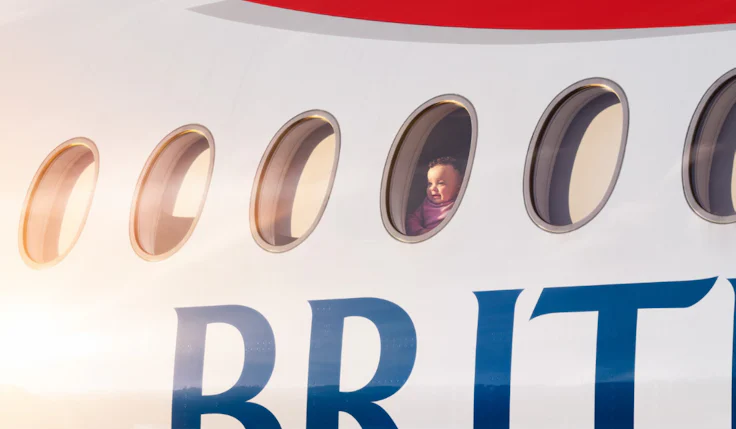
Other high performers included British Airways, which rises 11 places to 55 after a 41% increase to $1.25bn (£930m), and Dettol, which enters the ranking for the first time at number 34 with a brand value of $2bn (£1.4bn).
Dettol is one of BrandZ UK’s highest ever new entrants, and Gillary says its success is a “celebration of the transition [it has] undergone from medical disinfectants to family care”, particularly through its ‘Spread Love, Not Germs’ campaign, which allowed it to “tell the story of germ care in a really emotionally resonant way”.
“Post-Covid, hygiene became a bit of a hygiene factor. Being an effective cleanser or sanitiser, well, everyone did that. So they really had to elevate themselves,” she says on Dettol’s success, as the brand has expanded into fabric care and personal wash.
It’s consistency, but it’s about re-expressing that consistency as culture evolves.
Jodie Gillary, Kantar
British Airways is the fastest rising non-finance brand, with Gillary putting its success down to it having “higher pricing power” and being able to justify its price point at a time when people “aren’t just choosing the cheapest anymore”, despite being more expensive than the likes of Ryanair.
“[It has] really focused on that celebration of why people travel, why British people especially travel, and really use its heritage and history in a really relevant way,” she adds, claiming that brands need to “walk that tightrope between being timely and timeless”.
Though Burberry drops five places to 25, and its brand value remains stagnant at $2.6bn (£1.9bn), Gillary says the luxury retailer is another example of a brand expressing its heritage in a “culturally relevant way”, through partnerships with content creators and social media campaigns.
Going forward, Gillary’s advice to brands is to be “braver and bolder” in brand building, and lean into digital tools, including social commerce, as well as cultural moments such as Oasis and the Lionesses to disrupt in a modern manner. Yet she claims that your “brand’s DNA” also has to be consistent and be “on the journey with you”.
“It’s consistency, but it’s about re-expressing that consistency as culture evolves,” she says, naming Yorkshire Tea and Cadbury as examples of good practice with their distinctive slogans forming a platform for them, and Just Eat as a brand that has had share taken from it by Uber Eats, which has disrupted the scene.