Why BBH has succeeded at the risky endeavour of a rebrand
In a world where everybody else has been bolting letters on, taking letters off, splurging together and splitting apart, BBH has struck a fantastically on-brand message that marketers can learn from.

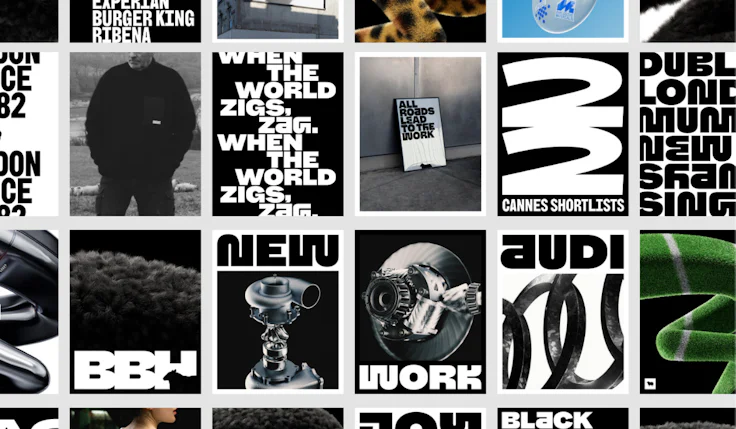
BBH have gone for it.
A rebrand that is all over LinkedIn and presumably all over their office and in their clients’ inboxes.
A full-on, multimedia, font-changing, style-guide-animating re-articulation of what they’re all about. In doing so, they’ve broken the first rule of rebranding – to never talk about the rebrand – and I think it’s brilliant.
Good marketers should never talk about rebranding to their customers, because, frankly, customers really couldn’t give two hoots about your rebrand. Customers really couldn’t give two hoots about much to do with your brand.
Their hoots are reserved for much more important things: getting the kids to school on time. The mortgage. When is it going to stop raining?
Your brand? Not so much.
I’ve sat in many a pub asking how clients can trust agencies to look after their distinctive assets and culture when they seem to have such a complete disregard for their own.
That’s not to say that well-built brands are unimportant, or that well-executed rebrands don’t have an impact. They’re a critical part of the marketing armoury and a vital vehicle for developing the consistency needed for long-term profit growth.
The rebrand is a risky endeavour, however, with massive opportunities for navel-gazing and budget-burning.
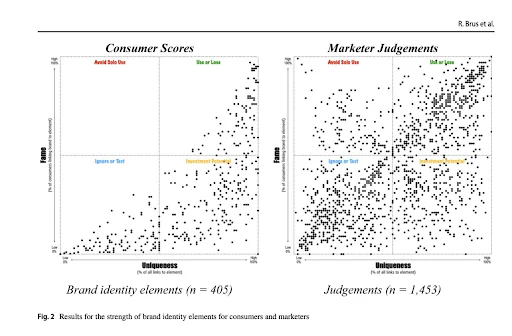
Chief among those risks is the one where marketers believe that lots of things count when they really don’t. The graph below from Ehrenberg-Bass shows how terrible marketers are at judging their own work. It compares consumers’ judgment about what brand assets are famous and unique, with marketers’.
And marketers lose big. Just 2% of marketers come within 5% of consumers’ actual responses.
BBH know all this. They know that marketers care for and obsess about brands more than customers.
They know that rebrands mean next to nothing to most audiences.
They know that showing off your new typefaces is like showing off your children’s artwork. Your own children’s artwork is amazing, but who cares about anybody else’s? (My children are the exception here; their work is obviously outstanding.)
So why the big show, and what can marketers learn from it?
Before I go into those reasons, it’s worth saying that I’m writing this as a fan of good B2B marketing. I’ve no particular relationship with BBH, other than having worked with them when I was running the show at Dulux many moons ago.
Here are three lessons from BBH’s agency rebrand, based on real-world brand-building truths.
1. Start with your customer
BBH’s audience isn’t a consumer on their weekly shop, or a business on the hunt for an upgraded SaaS platform. Their audience is businesses who want to build brilliant brands. Marketers.
Those same marketers who care and obsess about brands, who should usually be ignored – they’re the people BBH need to talk to.
So, BBH can stick two fingers up to the usual rules of rebranding because this time, the audience cares. If you’re a marketer looking for someone who will obsess about your brand as much as you do, look for someone who obsesses about their own.
BBH are therefore allowed to show off their three typefaces, which are named after their three founders: Bartle, Bogle and Hegarty. They can show off the new global website, the 3D zags, the new deck template, the remake of a classic BBH ad, the new website reel, PR film, the new merch, and the whole new look and feel.
The message to the customer? We’ll love your brand as much as you do. That’s a door opener as an agency. Later in the discussion, you can show them the rational, functional, System 2, data, science, AI and tech capabilities.
Showing off the self-obsession they have for their own branding, in this instance, is very System 1.
2. Distinctive brand assets
When the world zigs, zag. That’s the BBH line. It started as a line for a Levi’s ad, as did the black sheep, which is BBH’s logo. Those two assets feature heavily in BBH’s new work, and have done for decades.
BBH have kept hold of those assets because they’re distinctive and they carry meaning for the customer. No other agency has a black sheep; the zig-zag line has always been theirs, and they’ve used them consistently for what seems like forever.
In keeping them, respecting them, not diluting them or changing them, BBH are speaking to every good marketer out there who knows you don’t mess with your distinctive assets. They’ve added some other cool stuff, like the signatures of the three founders and have also used their names to identify the three new typefaces.
Distinctive assets, used creatively, everywhere. It’s a move from a business that wants to say they’re a brand builder without telling anyone they’re a brand builder.
3. Actions, not just logos and words
If you know your onions, then you know that having good-looking, distinctive assets is a very small part of the brand-building job.
We live in a fragmented world, and it is no longer enough just to slap a logo on something, make it bigger and call it brand building. Actions matter more than ever, and executing those actions in a distinctive way is a huge challenge.
Dr Grace Kite and Tom Roach talk about this as a new fragmented world of “lots of littles” – in which big results happen through consistency in action, assets and attitude, adding up in all sorts of ways, large and little.
A little example would be those ‘BBH Sans’ typefaces. They are available to anyone, downloadable as a font, free to all. Any marketer, designer or producer in any business can quite literally use a little bit of BBH in their presentations. It’s a small thing, but a thing of beauty. It says: “This is our world and you can be part of it.”
The largest example of brand building in action is, ironically, the result of not changing anything at all.
BBH. Three founders. Three letters. The same as it was at the start.
You have to be something of a marketing geek to understand the power in that.
Five banana skins for marketers to avoid in the coming year
Over the past decade, many agency brands have disappeared through holding company takeovers, consolidations, dilutions, absorptions, restructures and takeovers.
Many of the agencies that have disappeared used to be businesses with names that clients wore on their sleeves like badges of honour. Being the one who stayed true to your roots is not only consistent, it is also different and distinctive.
And it’s as much a cultural thing as a commercial one. B2B marketing is often carried through how people show up and agencies are no exception to that.
Take pride in what you do, and your people will follow. Be careless with what matters, and carelessness will follow.
I’ve sat in many a pub asking how clients can trust agencies to look after their distinctive assets and culture when they seem to have such a complete disregard for their own.
BBH is presenting an exception to that challenge. I don’t know what it’s like under the bonnet at BBH at the moment, but this is work I expect their employees will be proud of and their clients will enjoy.
In a world where everybody else has been bolting letters on, taking letters off, splurging together and splitting apart, BBH has struck a fantastically on-brand message, putting the words from their line into action.
The world has been busy zigging. They’ve just zagged.
Johnny Corbett is the founder of marketing consultancy WhichWayUp. He has worked in leadership roles for large corporate businesses, startups and agencies and has collaborated widely across sectors including consumer goods, technology, financial and professional services and the public sector.


