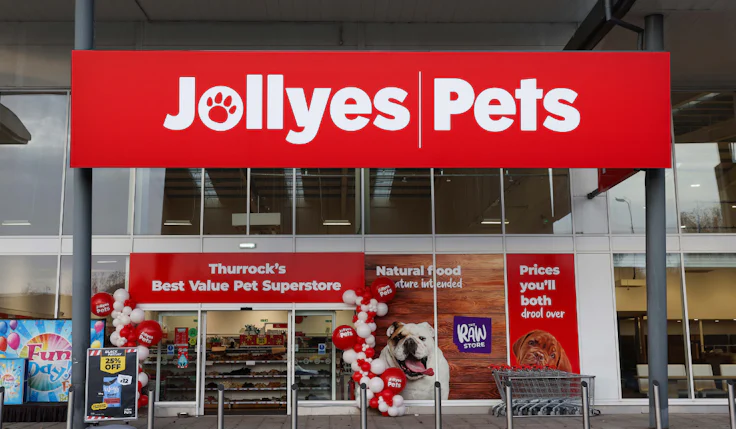
The easiest way to be distinct is by always looking the same
Whether true differentiation can ever be achieved is open for debate, but if marketers want to avoid drowning in a sea of sameness, the best thing they can do is leave their brands well alone.
 By JP Castlin

A year ago, or thereabouts, I gave the opening keynote at a particularly lovely conference in the US. From what I could tell, it appeared to go well: the audience gave me a loud cheer as I left the stage. Admittedly, I still do not know whether it was for the presentation I had just provided or the fact I was, after 45 minutes, finally shutting up. But whatever the reason, there it was.
The applause was much appreciated. It had been a long morning. The hotel’s fire alarm had gone off at what one may only describe as fuck off o’clock – and as if that were not enough, the culprit had proven to be a broken coffee machine. The only one they had, in fact. And so, despite the adrenaline hit that speaking in front of a large crowd provides, I was absolutely dying for some caffeine.
Before I could make it to the mud station, however, a dark-haired woman in her mid-forties grabbed my arm, pulled me aside, and began enthusiastically barraging me with questions. Most had to do with management (unsurprisingly, as it turned out she was the CMO for a very large and well-known brand), but then she asked:
“And what about differentiation?”
“What about it?” I replied.
“Well, I need to achieve it.”
“Do you? Why?” I asked.
The look on her face was one of utter confusion. “Because we live in a world of increasing sameness.”
Her line of reasoning reflected what has become a marketing truism of late: everything these days is basically the same. Cars look the same, interiors look the same, people look the same, brands look the same. Perhaps they do. My friend Alex Murrell, for one, has made a compelling (and by now quite famous) argument for it being the case. But does it therefore follow that all brands should seek differentiation? And if it does, is that not precisely what brands have been doing for the longest time anyway?
What really is going on here?
The only way to answer is by first establishing what differentiation actually means. The relevant urtext is Edward Chamberlin’s The Theory of Monopolistic Competition from 1933. In it, Chamberlin argued that:
“[A] general class of product is differentiated if any significant basis exists for distinguishing the goods (or services) of one seller from those of another. Such a basis may be real or fancied, so long as it is of any importance whatever to buyers, and leads to a preference for one variety of the product over another. Where such differentiation exists, even though it be slight, buyers will be paired with sellers, not by chance and at random (as under pure competition), but according to their preferences.”
That is to say, differentiation can stem from a) tangible attributes – or, logically, the processes that create them – or b) perceptual distinctions created by marketing and advertising. So differentiation may be real or only perceived to be real.
The reason why marketers fail to create and maintain differentiation in this world of increasing sameness, then, is at least partly because they themselves perpetuate it.
The point is an important one to make, just as it is important to point out that few make it – including those otherwise most quoted. Michael Porter, for example, has long argued that differentiation always is perceived. Most marketers, at least from my experience, do too. Even Byron Sharp, despite his (entirely warranted) critical views of Porter, contends that differentiation is about features of a product or service that differentiate a brand “in the eyes of the customer”.
Yet the conclusion is not necessarily warranted from Chamberlin’s original quote. Differentiation is entirely possible to achieve even though it remains completely invisible to customers. For instance, one may create it through unique manufacturing processes that:
- Enable superior performance or value delivery,
- Enable more cost efficient, scalable, or resilient outputs, or
- Are difficult to replicate (whether through technological prowess, worker skill, resource endowments, or something else).
Strategists adhering to the resource-based view would describe these as VRIN resources: advantages that are valuable, rare, hard to imitate and hard to substitute. None of them has to show up on a pack, a price ticket, or in a pre-roll for it to matter. On the contrary, the end result could very well be a product that is objectively different in terms of performance or value delivery but appears identical to all others on offer at the point of purchase – and beyond, unless a competing product is brought in for comparison. Economists call such categories credence goods, where quality gaps are hard or impossible for buyers to verify even after use. There, genuine differentiation can stay permanently invisible on the demand side.
Similarly, the inner workings of a differentiated manufacturing process will not automatically be visible to the end-user of whatever comes out of it. And although marketers are quick to reflexively claim that any difference should be communicated tout de suite, it may not be in the interest of the company to do so.
Much like how a cost leader might be best positioned in the event of a price war but would stand to make a larger profit if one can be avoided, a differentiated manufacturer could want their good to be perceived as identical to all others if they enjoy unseen advantages in the process of producing it. The relevant axiom here is Hotelling’s law: in many markets, it is entirely rational for producers to make their products as similar as possible.
There are, in other words, plenty of business strategic reasons for why one would not want to be differentiated. But I will grant you that many marketers nonetheless do. So why do brands still end up so similar?
In the battle between salience and differentiation, Bothism wins
The sameness problem
Part of the reason for the sameness, I suspect, is that marketing departments pretty much look the same too. People strongly conform to and affiliate with those they perceive as similar; there is a robust human tendency to become like those around us, particularly under social pressure such as that experienced at work. But even without explicit pressure, we naturally gravitate toward others who resemble us (in demographics, attitudes, or values) and discount those seen as different.
Thus, when firms recruit marketers to differentiate their brands, they are more likely to hire those that already share a view of the best ways of doing so, either because they have similar backgrounds (being the same kinds of people with the same kinds of training from the same kinds of schools), similar experience (from the same kind of companies in the same kinds of verticals, the same kind of technologies and the same kind of processes), or both. These marketers then use the same research agencies, ask the same questions to the same group of buyers, get the same responses and derive the same surface insights.
Even the supposedly most differentiated brands on the planet tend to be described primarily in terms of category generics.
The reason why marketers fail to create and maintain differentiation in this world of increasing sameness, then, is at least partly because they themselves perpetuate it. Organisational theorists call this institutional isomorphism: firms copy what respectable peers do and staff themselves from the same professional pipelines. Over time, the range of thinkable strategies narrows, regardless of what the market actually needs.
And as if that were not bad enough, the situation is only going to get worse. As the use of artificial intelligence solutions rises, so too does the adherence to established best practice, leaving original human thought by the wayside. Soon, the reason for the overwhelming sameness will not be strategic or psychological in nature, but simply one of “computer says no”.
Personally, I am torn on whether true differentiation can ever be achieved. I have yet to see data that convince me; even the supposedly most differentiated brands on the planet tend to be described primarily in terms of category generics.
Brands can stand out from the crowd by being distinct, though, and the easiest way to do that is by always looking the same. Not as everyone or anyone else, but as ourselves. Unfortunately, this leads us to a rather controversial answer to the original question: if marketers want to avoid drowning in a sea of sameness, perhaps the best thing they can do is leave their brands the hell alone.
Now where is my coffee?
JP Castlin is a former M&A lawyer turned strategist, who writes across the breadth of marketing with a focus on how the function fits and creates value within the wider organisation. His work spans published theory and high-level consulting in strategy, uncertainty, marketing, decision-making and economics. He is also an author and keynote speaker.