TV advertising at 70: Behind the top ads in history
Seven decades on from the launch of Britain’s first TV ad, Compare the Market, Sport England, Just Eat and ITV reflect on effectiveness, creativity and the evolution of TV.
When the first TV ad launched on British televisions 70 years ago, only 100,000 homes in London and the south-east could receive the ad on special TV sets.
Early TV advertising was simple, often black and white demonstrations, talking heads or jingles. Budgets were limited, and the medium itself was still new. Since then, the role of TV in advertising and the creative ambitions of brands have evolved.
To mark the 70th anniversary of TV advertising, ITV has released a report naming the top 70 TV ads of the past seven decades, analysing what made them effective. Although ITV is a media owner, the brand’s director of client strategy and planning, Kate Waters, says the broadcaster wanted to highlight creativity.
“While we are a media owner – so ultimately, what we do is sell airtime and sell space – we should always also have a very strong point of view on creativity,” she tells Marketing Week. “We’ve always felt we should encourage people to make the best possible ads.”
The report, produced with System1 and D&AD, explores how TV advertising has evolved while still driving strong emotional impact and business growth.
Lego, Skoda and Sport England TV ads among best of the past 70 years, study finds
Power of creativity
Analysis shows emotional storytelling, unconventional ideas and romance are consistent features of effective TV ads. Across all 70 ads in the study, 45% of viewers reported feeling happiness, well above the UK average of 33%.
The report also argues that advertising doesn’t just reflect society but helps shape it. From the Government’s stark AIDS awareness campaign ‘Tombstone’ in 1987, to Sport England’s ‘This Girl Can’ and Bodyform’s ‘Viva La Vulva’, ads have influenced national conversations and shifted attitudes.
ITV’s ‘Living Room Legends’ report identifies seven ads that “deserve a second look”, chosen by industry creatives, strategists and marketers for their “rich stories, bold decisions, and creative choices that still stand up today”.
Is a focus on effectiveness delivering bigger marketing budgets?
Waters suggests all the top ads have three things in common – some kind of “unconventional idea”, a form of “dramatic emotion” and “extraordinary craft”.
She notes that advertising has evolved over the decades – from early product-focused campaigns as brands learned how to use TV, through to the 1990s when marketing shifted towards building long-term brand building. Alongside that evolution, changing attitudes towards diversity, equity and inclusion have become more visible in advertising.
“Do ads reflect culture, or do they sometimes lead culture? I think it’s a bit of both,” Waters says.
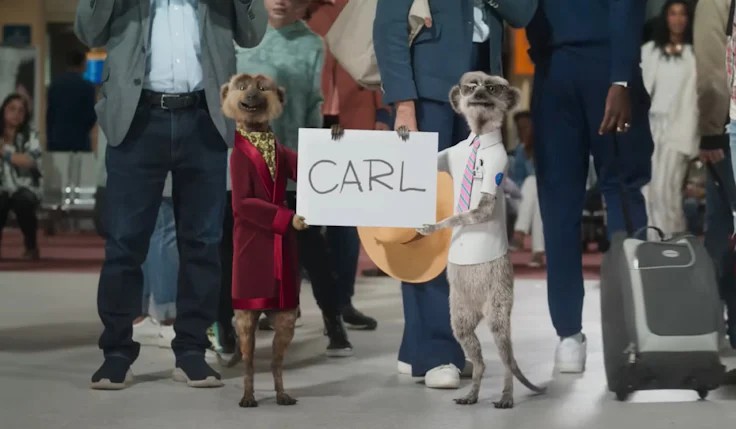
One of the standout campaigns highlighted in ITV’s report is Compare the Market’s ‘Compare the Meerkat’, launched with VCCP in 2008. Featuring the fictional Alexandr Orlov, the campaign turned the low-interest world of insurance comparison into something entertaining, character-led and culturally memorable.
“The reason the meerkats were created originally was because it’s a relatively low-interest category and so we need to do something that helped it stand above that, creating entertainment first of all,” explains the brand’s chief customer officer, Tom Wallis.
Fifteen years on, Compare the Meerkat remains one of the UK’s longest-running brand campaigns. Its success illustrates the power of what System1 terms a “fluent device” – a creative asset that, with consistent use, builds long-term fame and emotional resonance. The characters have become part of British popular culture, with the catchphrase “Simples” entering the national lexicon.
“The characters have entered popular culture, through the things that they’ve done over the years, the different scenarios they’ve been in, the ongoing stories that they’ve had. They’ve really cemented their place in the hearts of the public,” explains Wallis.
While Compare the Market’s spend on audio-visual media is broadly the same as in 2009, investment has shifted away from linear TV towards video-on-demand and social platforms. Still, Wallis argues, linear TV continues to play a vital role in reaching mass audiences.
“It’s based on where the audiences are,” he explains. “People are still watching TV. Sure, there are a few people watching on different platforms, but you still can’t replicate the immersive nature of that audio-visual format.”
The cost of dull
System1’s global testing shows that “neutrality” is the most common emotional response to advertising. Almost half of UK TV ads evoke no strong emotion at all – a problem, since ads that fail to spark feeling are less likely to be remembered, shared or acted upon.
Waters notes that advertisers can often view creativity as risky. “What the ‘cost of dull’ research shows is that the real risk isn’t in being creative, it’s in being ignored,” she says. “That’s such a powerful framing of that challenge.”
On average, a dull campaign requires an additional £10m more in media spend to match the effectiveness of ads that trigger an emotional response. The ads highlighted in Living Room Legends avoid this pitfall. Just 31% of responses to them were neutral, compared with a UK average of 47%.
Why do we need paid media? The answer is simple: if we don’t get the right message with the right creative to the right women, then it won’t work.
Kate Dale, Sport England
Effective ads can also reflect social reality and spark debate. Sport England’s 2015 ‘This Girl Can’ campaign, for instance, tackled the gender gap in physical activity, with research identifying a lack of confidence as a barrier. Launched across digital and primetime TV, it became a cultural talking point and spread widely on social media.
“Having a paid media strategy in 2025 is a hell of a lot more complicated than 10 years ago,” explains Sport England’s director of marketing, Kate Dale. “But television is still a hugely important part of it, because it’s the community, it’s the family, it’s the group, it’s the friends, it’s watching it together and having the conversations that spark from it.”
System1’s ‘Feeling Seen’ research highlights the business value of authentic representation. Ads featuring diverse characters perform slightly above the UK norm overall, but among diverse audiences the impact is much greater – lifting effectiveness scores, emotional intensity and short-term sales potential.
Sport England has recently launched the latest iteration of the campaign – its first paid media push since 2020.
“This has been the longest gap without a heavyweight paid media support. The fact people remembered it so clearly is incredible and says a lot about that original ad,” Dale says.
The latest campaign used AI-powered analysis of over 4,000 publicly available photos from sports clubs, community centres, parks, gyms, swimming pools and other leisure facilities across England.
The study found that Black women, South Asian women, women with disabilities, older women and pregnant women are almost entirely erased from the picture of sport and physical activity presented online.
“Why do we need paid media? The answer is simple: if we don’t get the right message with the right creative to the right women, then it won’t work. We can’t just do that using the channels organically that we already have. We need to use paid media to do that,” Dale says.
Just Eat earned a spot on the list of top 70 campaigns with its 2020 ‘Did Somebody Say’ ad featuring Snoop Dogg, making it one of the most recent ads to make the list.
The brand launched the campaign during lockdown, which led to an increase in TV viewership and generated “more shared viewing opportunities for brands to convey their narratives,” explains Just Eat’s head of media and social, Ryan Gardiner.
“Television is highly effective at emotional storytelling, a capability that other mediums often find challenging to replicate,” he explains.
Upon launch, the campaign delivered more than 90% positive sentiment on social media. In 2020, the UK team served 179 million orders, a rise of 35% on 2019 and during the first two months of 2021, Just Eat’s UK orders rose by 88% and deliveries were up more than 600% compared to the same period the year before.
Since then, the brand’s approach to TV advertising has remained “largely consistent”, Gardiner says, with the more significant transformation in the way campaign assets are designed for VOD and social media.
“Rapid fragmentation presents an ongoing challenge for traditional broadcasters, encompassing both time-shifted viewing and attention migration to alternative channels,” he explains.
“As a brand, our focus is on identifying the environments where our audience spends their time and earning their attention with entertaining ads.”
Lessons for modern marketers
Marketing today is far more fragmented than in 1955, or even 2015, with brands expected to reach audiences across a growing mix of channels.
The report argues that the most effective campaigns focus on consistency, entertainment, strategic rule-breaking and building long-term memory structures rather than chasing fleeting attention.
At the same time, brands must produce more content than ever to support a single campaign.
“That shift in requirement to produce more and more assets means, inevitably, that your budget has got to go across all of those different things,” says Waters.
‘You don’t do it to get budget’: Marketers on the value of effectiveness
In terms of whether ads launched in the “golden age” of TV would still have the same impact today, Wallis believes the meerkats would still work if launched today, but the path to cultural impact would be tougher.
“They would probably be social-first,” he says. “It is harder to fight for cultural attention today, so I think it’d be a harder job, but I certainly think that we would like to have a good go at it if it were the case.”
He adds that while TV’s collective power has weakened as audiences pick other channels, it remains unmatched in delivering immersive, audio-visual storytelling.
“TV would bring people together – it was the most powerful thing, and to some extent, that is fading now because people aren’t all watching the same thing. But it still is the only real engaging audiovisual format where you’ve got a decent amount of attention. So I think that it still has a big part to play in forming some sort of emotional connection with consumers, which is harder to do.”