‘Active choice’: Do customers need ‘meaningful friction’?
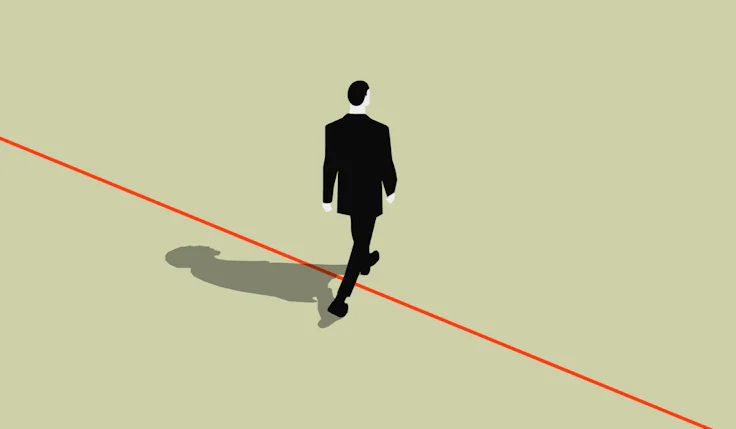
Rather than delivering fully seamless experiences in the age of agentic AI, should brands be adding some useful friction to the customer journey?

The tactical use of friction in the customer journey is not new, but it may be achieving a new level of importance as technology supercharges the evolution of how we behave.
From supermarkets changing the location of products in the hope shoppers will make more impulse purchases, to Spotify introducing elements of friction to prevent users from ‘doom scrolling’ themselves into a stupor, the idea of making customers work a little harder for what they want has a long history.
As tech allows greater personalisation and the ability to reduce any and all barriers to transactions, do more brands need to introduce artificial hurdles to slow us down? Do customers need to overcome some kind of barrier to value what they get as a result, or do they really just want a seamless journey to purchase?
When deciding a strategy, brands need to take careful stock of friction that already occurs naturally. Charlotte Morley, founder of secondhand children’s clothing marketplace The Little Loop, says the company’s entire model assumes an existing level of friction, because it is seeking to drive a change in behaviour.
“We always start from that point of thinking, there’s already emotional friction here, because people are coming on assuming that they won’t find what they want,” says Morley.
Meaningful friction is those things that add value. They improve something and touch something in the person’s experience, in their life. They add meaning to brands.
Kate Nightingale
Potential customers will come with preconceptions about secondhand products, she says.
“So we therefore have been absolutely laser focused on removing all friction,” Morley explains.
However, the brand does offer customers the chance to invest some of their time in building a deeper relationship with its offer, on the basis that this will increase the chances of repeat transactions.
“I learned years ago about something called the Pinterest figure of eight model, which was that if you go to the effort to create a Pinterest account and add items into it, you have expended some energy. You don’t want to waste the energy that you’ve expended. So you are more likely to come back again,” says Morley.
“If you can build a business that has that stickiness because someone has invested energy into it, then they are more likely to be loyal and that we absolutely do. So we don’t talk about it as friction, but if you like there is some of that. So with our model we do make people, in the most part, create an account.”
Hyper-personalisation and ‘game changing’ consigned to Marketing’s Room 101
As well as creating an account, customers can save their purchases into a virtual closet and are offered a buy-back price, again creating closer ties with the brand and giving them reasons to return. Purchases from other brands can be added to the closet. For The Little Loop, these strategies are paying off.
“60% of our purchases each month are from returning customers,” says Morley.
Of course, customers won’t view the friction of one experience in isolation. The amount of friction involved in dealing with competitors or alternatives comes into play as well.
Morley notes platforms such as Vinted have helped increase the popularity of buying secondhand clothes and removed much of the friction involved in the customer experience. However, such sites have added a different element of friction back in by encouraging an environment of bartering.
That creates friction that could, potentially, feel more off-putting to sellers who need to deal with low offers and bargain hunters, as well as with photographing, packaging and posting.
“You find people never come and buy your thing straight away. They’ll favourite it and then they’ll offer on it and then, only if you give them some of a discount, will they buy it,” says Morley.
Anthropomorphised AI
Not all friction is equal, say experts. Behavioural psychologist and founder of Humanising Brands, Kate Nightingale, makes a clear distinction between meaningful and meaningless friction.
Meaningless friction, such as clunky navigation or payment systems invariably caused by poor design, can cause frustration, anger and even lost customers. But, in some situations, friction can add meaning.
“Meaningful friction is those things that add value. They improve something and touch something in the person’s experience, in their life. They add meaning to brands, they represent brand values,” says Nightingale.
Personal greetings, relevant recommendations, expert advice, or suggestions based on past behaviour can all create moments of meaningful friction, for example. Sometimes, these might be welcome – but not always. Either way, they can make a big difference to the customer experience.
We’ve almost become robotic, whether that’s scrolling on social or going about our daily lives. When you put it like that, a bit of fiction to make you stop and think.
Rory McEntee, Gymnation
Simply adding steps to a checkout process has been shown to reduce impulsive behaviour among some neurodiverse consumers, especially those with ADHD, says Nightingale. While that might not appear to be in the interest of a retailer, it could yield benefits later by reducing the number of expensive returns the retailer has to process.
The challenge for brands is knowing when customers want a quick transaction and when they want to explore or linger. Nightingale likens this to the way we might interact with human friends: sometimes you might just want a quick catch-up, sometimes you have time for a more deep and meaningful conversation. Without the option for the latter you wouldn’t establish a deep relationship.
In this there may be a link to the basic principle of commitment, itself one of the reasons consumers don’t tend to value things they have been given for free.
Again, technology may be altering the relationship between brand and customer here. The use of AI is evolving fast and that may accelerate as it learns to better behave like a human.
“Although the relationships that people have with AI are very short term for now, the reason why they’re so impactful is because of the anthropomorphism of AI,” says Nightingale.
Consumer insight and AI can revolutionise customer experience
Getting AI bots to use familiar phrases, admit to mistakes and ask how we are doing increases the human tendency to assign human values to non-human entities, she explains.
“We are actually, as human beings, creating much more intimate and loving, even romantic or friend-like, relationships with AI. There’s a heavy level of dependability attachment that is synonymous with human relationships, because we are simply craving social connection that we can’t necessarily achieve well enough with real humans,” Nightingale states.
So will brand AI be used to create more demanding virtual friends and add a little friction to customer-brand relationships? There may be no one-size-fits-all answer.
“This is not going to be the right thing for every brand, nor the right thing for every customer,” says Nightingale.
The ability of AI to ‘read the room’ well enough to offer the most suitable approach to customers with different moods or demands could be the key to its success.
“The same way as you are able to recognise in social situations where someone wants a quick exchange or very focused support, those expectations are changing towards brands. Even if the brands are not using an AI, those same expectations stand. So we do actually expect brands to be more anthropomorphised,” she says.
Stop and think
Gymnation CMO Rory McEntee recognises the argument that sometimes modern life can be a little too free of friction.
“I do feel we do live in this life now where we’re just constantly on, almost that we struggle to be present in life. We’ve almost become robotic, whether that’s scrolling on social or going about our daily lives. When you put it like that, a bit of fiction to make you stop and think, and be aware, is a good thing,” he says.
For World Mental Health Day 2025 (10 October), Gymnation threw its members a curve ball by removing the free weights from its premises.
“It caused a little bit of friction, because people are actually coming into the gym to work out,” says McEntee.
After initial annoyance, most customers valued the chance to think differently, consider their mental health for a moment and adapt their workout.
“It made them just kind of stop, think, start a conversation, and essentially there were other things they could do, like calisthenics [strength training],” he says.
We want them to have an active choice. We don’t want them just to lie back in the seat and have the whole experience happen to them.
Robbie Balfour, the O2
The growth of AI is making it ever easier for brands to remove friction from the customer experience, which may ultimately increase that sensation of robotically scrolling through life. Will we miss the blemishes and trips of the real thing?
“AI lacks that human element. Bringing human connection into it adds a little bit of friction. We crave human interaction more than ever now,” adds McEntee.
Of course, the need for or resistance to friction will differ depending on customer mission and there might be unexpected challenges.
Director of marketing and brand at the O2, Robbie Balfour, explains visitors to the south London venue encounter enough friction while getting across the city. He would not be keen to add any more.
“We still see one of our core experience principles is to make it seamless and that means the experience that people have is, I guess, free of friction, seamless and intuitive, and all of those great things,” he says.
However, Balfour does point out that a visit to the O2, whether it be for shopping, dining, or to see a live concert, involves active engagement rather than passive watching. The venue distinguishes between participation in the ‘sticky’ product it offers and friction involved in accessing it.
“We want them to have an active choice. We don’t want them just to lie back in the seat and have the whole experience happen to them. We want them to feel like it’s a true in-real-life experience, that they have choices…but ultimately, when they are making those choices or going through the customer journey, we still believe that making it seamless is really important,” says Balfour.
“We know that like the journey, from somebody deciding to leave their home, doing something in our venue and coming all the way back home, it really only takes one bad moment to derail the whole thing.”
It’s even true that using the latest technology to remove elements of friction can lead to confusion among consumers, he adds.
For example, the O2 has installed the latest Evolv security scanners at the entrances to its live event space. These scan people entering the venue, looking for weapons or suspicious packages. By giving the all-clear to some people the system massively reduces the number of bag searches required, simply flagging up those who require extra attention.
However, some safety-conscious visitors have expressed concerns that people aren’t being searched thoroughly enough to assure them things are safe.
“It reduces friction and you literally just walk in, you don’t have to empty your bag and put that through a separate scanner. However, we have had some customer feedback saying that they didn’t necessarily feel that they were being searched enough,” says Balfour.
It seems providing the right level of friction for every customer is a long way off yet.