How Audi UK goes against category conventions to avoid the auto industry’s ‘biggest dangers’
Audi’s UK marketing boss says its four-decade partnership with agency BBH has allowed the car marque to “be bolder than most brands would dare”.
 Wide open roads. Gliding drone shots. Glowing sunsets. Couples smiling behind the wheel. These scenes could describe any number of car ads, with much of the automotive industry leaning on the same tried and tested formula.
The same could be said of the functional language used in these adverts.
But one brand looking to distinguish itself and pave a different path is Audi, which has deliberately rejected the conventions of the category.
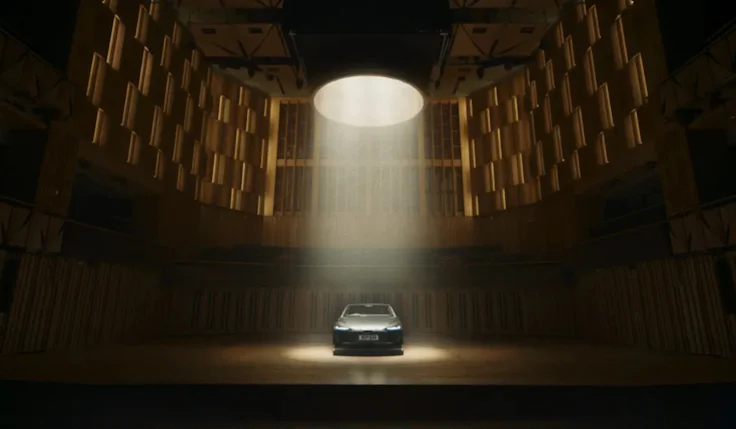
In its most recent ad, ‘Light, as you like it’, for example, a choir sits inside an A6 Avant e-tron singing a rendition of ‘I like to Move It’, while last year’s ‘Love at First Light’ shows a moth following a car’s LED headlights.
Audi UK’s director of marketing and digital, Tony Moore, believes taking an alternative approach like this helps the car marque stand out in an increasingly crowded category.
“If you tested those ads against the category norms, they wouldn’t tick a single box,” he tells Marketing Week. “And that’s exactly why we made them.”
“I think that [sameness] is one of the biggest dangers in the auto industry.”
Where other car brands talk about technical specifications and statistics, Audi wants to focus more on the emotional relationship people have with its cars, Moore explains.
“It’s about making a human connection,” he says. “Not just showing people around the car, but giving the car itself a personality.”
He believes the UK’s unique sense of humour allows it to have a very specific relationship with UK car buyers, which he describes as “distinctively Audi”.
Be brave enough to say when something didn’t work, tweak it, and go again.
Tony Moore, Audi UK
Audi has worked with creative agency BBH for more than four decades, which Moore says gives the brand more freedom to take risks, as the two businesses have created a solid foundation.
“That shared history means we can move fast, push harder and take creative leaps we couldn’t take without that level of trust,” he says.
“When you’ve got 40 years of shared understanding, you can afford to take risks. That connection lets us challenge the category and be bolder than most brands would dare.”
For BBH London’s chief strategy officer, Will Lion, trust is everything. “With new clients, risk appetite starts low,” he says. “It grows as the relationship deepens. When you’ve got 43 years together, you know what works. That’s when you can really zag while everyone else zigs.”
Over the years, Audi and BBH have worked to formalise a set of five core creative principles, which it keeps confidential, that every piece of work must meet.
“We literally score ourselves against them,” Lion says. “You can’t fudge it with ‘nice meeting, nice ad’. It’s there in black and white.”
Ineos Automotive CEO: ‘Marketing is integral to what we are trying to achieve’
BBH also uses AI to guard against clichés, feeding automotive advertising into a tool that maps the tropes to avoid. “We call it the ‘Zig Radiation’,” says Lion. “It’s our Chernobyl map of mediocrity. If we start drifting toward those tropes, we sound the alarm.”
For the global car sector, the index finds an 82% overlap in language and an 80% overlap on visuals, making it one of the sectors with the highest overlap overall.
“We’ve modelled which emotional qualities lead to brand desire, which in turn drives sales,” Lion says. “That gives you a logical argument for creative risk. Suddenly, the ‘mad’ idea is the smart one.”
Moore’s philosophy mirrors that balance between art and evidence. “You have to evaluate the hell out of everything,” he says. “Be brave enough to say when something didn’t work, tweak it, and go again.”
This appetite for risk is paying off. Audi’s measure of brand “desirability” has risen five percentage points over the past year—a key goal for Moore’s team.
“If you can build [desirability], you drive long-term growth. We know a 3% rise in desire gives a 5% lift in leads over time,” he says.
Audi’s latest campaign – Light, as you like it – has also boosted consideration by 5.1%, generated twice as much top of funnel website traffic and three times more direct leads than the initial target. Plus, it led to the highest-ever organic social reach for a product campaign.
How marketers are working through a ‘challenging time’ in the UK car market
Heritage and identity
The UK car market has rarely been tougher. New entrants are flooding in, particularly in electric vehicles, while total sales volumes have not recovered since the pandemic, according to the Society of Motor Manufacturers & Traders (SMMT).
Moore says Audi’s response has been to double down on what makes it Audi.
“You can’t have business as usual when 20% of the market didn’t exist five years ago,” he says. “You have to be clear about your DNA and keep communicating what makes you different.”
That DNA runs through one of marketing’s most recognisable slogans: ‘Vorsprung durch Technik’. When BBH introduced it in the 1980s, focus groups hated it, as they thought it was too foreign and, more importantly, too German.
The then-marketing director ignored the feedback. “It’s now part of British culture,” says Lion. “It’s in Alan Partridge, Peep Show, even a Blur song. It’s shorthand for modern progress.”
Even when the line doesn’t appear on screen, it sits beneath everything Audi does.
By BBH’s estimates, the total value of the Audi brand and the Vorsprung durch Technik line has delivered £31.8bn incremental revenue to the business over the 40 years since its launch in the UK.
The downside of being mediocre has never been greater. The upside of being different has never been bigger.
Will Lion, BBH
That sense of consistency runs through Audi’s customer strategy too. “We don’t just want customers – we want fans,” says Moore. “Fans are forgiving. They stick with you.”
Audi nurtures that fandom through ‘Audi Presents’, an experiential programme offering access to music, food and sport. “People who attend are 20% more likely to re-buy,” Moore says. “Fandom is deep, fandom is forgiving and fandom works.”
With Audi preparing to enter Formula 1 in 2026, Moore sees another chance to reach new audiences. “F1 gives us a platform to talk to a younger, more diverse audience,” he says. “It’s the perfect way to evolve our fan base.”
Staying true to the brand’s core while constantly moving forward is a recurring theme for Audi. “It’s easy to be brave just for the sake of it,” says Moore. “But you need to know what made your brand great. You evolve, but you don’t lose your centre.”
Lion adds: “Marketing’s natural state is sameness. So the downside of being mediocre has never been greater. The upside of being different has never been bigger.”