‘Time to be heard’: Norwegian Cruise Line on ’embracing’ its history and disrupting a category
Norwegian Cruise Line is reviving its 1990s tagline ‘It’s Different Out Here’ as part of a new global platform that uses humour and nostalgia to cut through category sameness and reposition the brand around freedom and flexibility rather than features.
Nostalgia and humour are two marketing principles that research repeatedly shows can drive effectiveness, particularly in crowded categories where brands can blur into one another.
Cruise company Norwegian Cruise Line (NCL) is attempting to do both with the revival of its 1990s tagline ‘It’s Different Out Here’, reintroduced as part of a new global brand platform.
The campaign aims to use humour to differentiate the brand in a category dominated by similar promises of luxury, relaxation and onboard amenities.
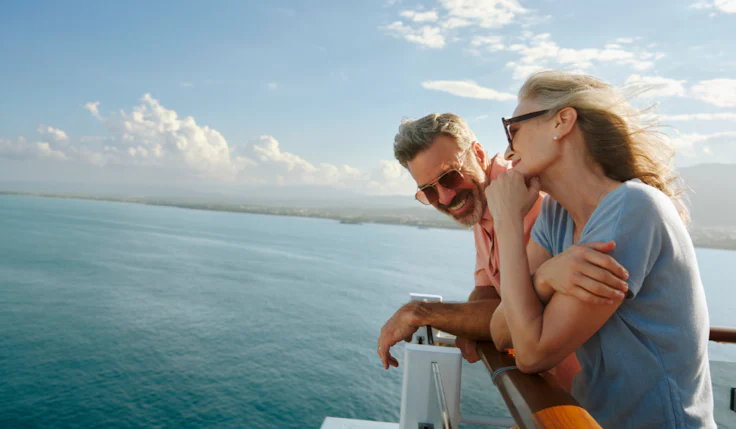
Rather than focusing on its features, like ships, pools and dining options, the new strategy positions NCL as a brand built around “freedom, flexibility and being present” in the moment.
Meanwhile, the decision to revive a legacy line was deliberate, according to CMO Kiran Smith, who joined the business in September last year.
“You come to a crossroad, and you can go one or two ways – push off your history and say, ‘nope, we’re going to chart a new course’, or you embrace it,” Smith tells Marketing Week. “At the core, It’s Different Out Here resonates with guests. We decided that’s the right thing for us, especially as a challenger brand.”
Same line, different tone
This is not the first time Norwegian Cruise Line has attempted to disrupt its category. In the 1990s, when the brand first used It’s Different Out Here, it launched with a series of sensual ads, depicting people in swimwear kissing.
At the time, the New York Times called the campaign one “that forgoes the cruise industry’s traditional approach of sun and fun for a more sultry, elegant tone”.
The current campaign, however, leans into humour rather than sensuality, to highlight the brand’s approach to flexibility with no set dining times, no formal dress codes and a wide variety of onboard activities.
Marketers unknowingly kill great ideas through risk aversion, here’s how to stop it
For example, one of the TV ads depicts old sailors asking whether there is any “leeway on the uniform”, noting their shoes would be better as “flippy floppies”, before pivoting to a modern-day family wearing flip flops to the restaurant.
Research suggests the approach is well-founded. An Oracle study found 90% of people are more likely to remember a brand if its advertising is humorous, while analysis of 1,500 campaigns by the IPA found that ads using humour delivered more than double the ROI of those that did not.
Developed with agency partner Arnold Worldwide, the campaign launched initially in the US, with UK TV activity due to follow in April. It will also run across out-of-home, social and radio channels.
At the heart of that story is what Smith describes as “flexibility and freedom”. The campaign positions NCL as an antidote to over-scheduled, overly structured travel, a cruise experience designed to help guests unplug and be present.
A key insight underpinning the work is a growing desire, including among younger audiences, to step away from constant digital connection and to be more present.
“It has a very big appeal to a generation that is dealing with a lot in terms of loneliness and is looking to find ways to unplug and to be in the moment. We feel like it’s really been resonating,” she explains.
The insight prompted a shift away from messaging focused on features and amenities, towards work that encourages audiences to imagine themselves in specific moments.
We’re doing it in a different way than we have in the past, but also than anyone in our competition has been doing. It is just very unexpected in our space.
Kiran Smith, Norwegian Cruise Line
“Instead of saying, ‘look at everything we offer’, we’re asking people to see themselves in the experience,” Smith explains. “Whether that’s on the beach on our private island or relaxing on deck by the pool.”
Although the UK TV campaign has yet to launch, early indicators from other channels suggest growing momentum. Since 1 January, UK social impressions have exceeded 150 million, while the campaign is set to reach around 89% of its global target audience.
Meanwhile, Smith argues that the sameness of the competition meant the timing was right.
“From a competition standpoint, we were all in the same place,” she says. “We looked the same, we sounded the same – we’re so interchangeable. We are disrupting that and saying: ‘You guys, stay over there, we’re going to start telling our story in our way’.”
“We’re doing it in a different way than we have in the past, but also than anyone in our competition has been doing. It is just very unexpected in our space.”
Ready for a sea change
Smith’s arrival as CMO followed what she describes as a period of readiness within the organisation.
“The key to joining a new business is to oversimplify it,” she says. “The company was at a point where they were ready for someone like me to come in.”
Smith has held multiple CMO roles, including a previous stint as CEO at Arnold Worldwide, the agency partner of NCL. She says the environment at Norwegian Cruise Line was notably receptive to marketing leadership.
“There’s a difference between a marketer coming in and being like, ‘hey, marketing is important’. That was not the case here,” she explains.
“They were like: ‘We are looking for a professional marketer who can help. We know we have a great product. We know we have amazing staff. We know we have really loyal guests that love us, but we need help telling our story’. That is an amazing place for a marketer to come in.”
Her priority was to establish what she describes as a “solid foundation”, beginning with a clearer articulation of the brand’s purpose, audience and points of difference.
“One of the most important things that we had to put in place first was the brand strategy – a clear understanding across the business, not just marketing, but across the whole business of who our core customer is and who our emerging customer is,” she says.
Previously, the brand’s marketing had aimed broadly at “everyone”, which Smith argues limited its effectiveness.
After undertaking research when Smith joined, the business ultimately identified two primary audience groups: over-55s and multi-generational families, such as young couples travelling with parents and children.
“For those groups, we solve a lot of pain points,” Smith explains. “There’s anxiety around how you keep everyone happy. What we really offer is the ability to be together, to enjoy time as a family and create memories. That’s the emotional connection.”
How a heritage cruise brand used a hybrid AI approach to make a splash
The decision to focus on two distinct customer groups was not without internal debate. Smith acknowledges there were concerns about how one brand platform could resonate with both.
However, the team identified several shared needs – including a desire for ease, flexibility and emotional connection – as well as a shared appreciation for humour.
The insight helped set in motion a broader brand overhaul, undertaken with relatively limited budgets compared with larger competitors.
“We’re not going to outspend everybody,” she adds. “We’re not going to be able to shout the loudest. But it was right because we have an incredible product. We have an incredible employee base. Our crew are phenomenal. Our ships are beautiful and really deliver on the experience we want our guests to have. It was time to tell that story and be heard.”
‘Full funnel organisation’
Ensuring the right level of investment across the funnel is a key priority for Norwegian Cruise Line as it rolls out the platform globally. “We are a full-funnel marketing organisation,” Smith says.
TV plays a key role at the top of the funnel, designed to build awareness, consideration and drive conversation, with phrases like “flippy floppy”, Smith admits.
Responsibility then shifts to middle and lower-funnel activity to convert that interest into bookings.
“As people start to show interest and want to learn more, our other marketing channels need to take over and drive someone through the acquisition process,” Smith explains.
However, Smith stresses the importance of maintaining balance across the funnel and avoiding over-investment in performance marketing at the expense of brand building. “If you focus only on performance, you create a performance machine without filling it up from the upper and middle,” she says.
“By focusing only on performance, you create the performance machine, but you’re not filling it up enough from the upper and lower,” she adds.
Alongside its core media mix, the brand is also testing additional channels. Last year, Norwegian Cruise Line ran an experiential activation to support the launch of a new cruise to a private island. The rest of the year is about building on the foundations put in place.
“A first domino has to fall when you do a campaign like this,” she says. “We fail if this is just a marketing campaign and nothing else. It’s now about: how do we bring our brand promise of freedom and flexibility, of being easy, curated and flexible across all parts of our business?”