‘The bar has definitely gone up’: How brands are ‘rewriting’ the Christmas playbook
Episodic approaches and story over product are two of the key themes defining 2025’s Christmas advertising, as brands grapple with new rules around advertising less healthy food.
 As brands face up to changing rules around how less healthy foods can be advertised on TV, this year’s Christmas ads are looking slightly different to what consumers are used to.
With the focus moving away from product, brands this year are concentrating more on storytelling – think Tesco’s eleven-part series and Waitrose’s four-minute cinematic feature.
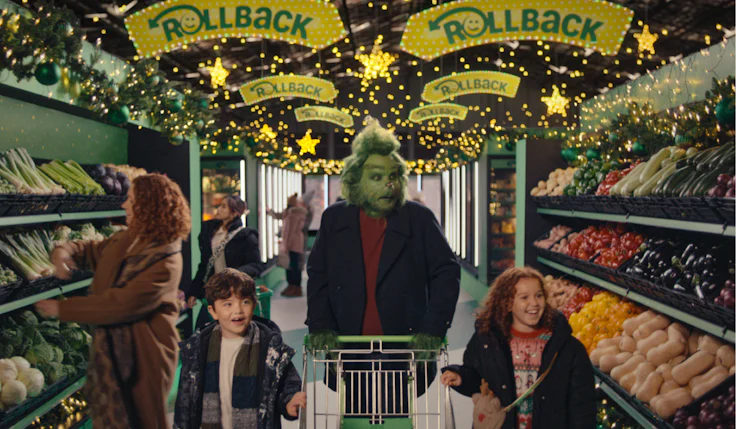
All the major supermarkets Marketing Week has spoken to have said they are compliant with and supportive of upcoming LHF guidelines, and acknowledged that this has marked a shift in their approaches. To avoid a focus on product, Morrisons also ditched its singing oven gloves and went for a new creative storytelling approach, as did Lidl.
Waitrose’s chief customer officer Nathan Ansell says it has been “a lot of work for the team” to make advertising compliant with HFSS and LHF regulations, but it has made it work, as well as making other choices, such as not showing mince pies until after 9pm.
Waitrose has seen early signs of success, according to facial tracking analysis from Kantar, which highlights the grocer is one of the “top performers” with its “emotive roller-coaster” of storytelling. It is in the top 4% of ads for emotive power, and top 6% for smiles of all UK ads.
These rules are, in a good way, pushing marketers to be a little bit more imaginative, find meaning and warmth in storytelling, be less reliant on sensory excess.
Kurt Stuhllemmer, Hall & Partners
Each of the grocers has had to be selective about product choice in advertising – yet Asda’s vice-president of marketing, Adam Zavalis, sees it as a positive, claiming it means the brand can show Christmas is “bigger than just an individual item or two”.
Kurt Stuhllemmer, partner at Hall & Partners, says it’s a “good thing” brands are “self-policing” and complying to LHF rules even though the law doesn’t come into force until 5 January. Overall, he sees a shift towards hero products no longer taking centre stage, and feels “the bar has definitely gone up this year from last year” in terms of advertising.
“It feels like the Christmas playbook is being rewritten a little bit,” says Stuhllemmer, adding that brands are still delivering “emotional indulgence” but “without relying on literal indulgence”, which sparks more creativity in advertising.
“I think these rules are, in a good way, pushing marketers to be a little bit more imaginative, find meaning and warmth in storytelling, be less reliant on sensory excess,” he adds, claiming that it also leads to innovation in media planning as campaigns are “much more 360”.
Like Stuhllemmer, Jon Evans, chief customer officer at System1, says he believe the LHF regulation is driving creativity, as there’s “more pressure to build a brand” for marketers who can no longer rely on showing indulgent products.
“It’s probably, ironically, encouraged brands to do what they should have done, which is build a brand,” says Evans.
The takeaway from these brands is around how are they building familiarity and how are they building relevance.
Matt Herbert, Tracksuit
Data from brand tracking company Tracksuit from May to October 2025 highlights that storytelling is important as brands look to drive “emotional relevance” amid healthy food regulations. It found that, in the soft drinks category, for example, emotional relevance drives conversion from awareness to consideration at 4.9%, which it says highlights emotional fit being “far more effective than functional cues like taste or price”.
Additionally, in the department stores category, relatability to the statement “this is for people like me” makes consumers six times more likely to convert from awareness to consideration. Tracksuit says relatability is a statistically significant predictor of long-term effectiveness, driving a 65% increase in consumer perception of relatability when highly pleasant emotions are triggered.
Matt Herbert, co-founder and chief commercial officer at Tracksuit, says Christmas ads are a culmination of how brands are “building trust, relevance, familiarity and knowledge” throughout the year – with more brands trying to “tap into” relevance.
Whether its through an episodic approach, or a longer-form film, he says it’s “interesting” to see the different approaches coming out from brands.
“I think the takeaway from these brands is around how are they building familiarity and how are they building relevance,” claims Herbert.
The LHF context only drives this in his opinion, as he sees an “emotional storytelling approach” likely to be used for brand advertising in all contexts, not just at Christmas – though the festive season is a great time to “drive home” the level of familiarity and knowledge of a brand, he adds.
Taking an episodic approach
According to Stuhllemmer, episodic advertising isn’t just defined by a multi-part advert. It extends into “through the line storytelling” and encompasses how brands show up in multiple touchpoints for a sustained period. He sees brands continuing activation into a “fifth quarter” around Boxing Day too, to boost sales.
Tracksuit’s data finds that having a sustained approach to marketing all year, not just at Christmas, helps to drive brand relevance all year round, and it claims M&S is an example of good practice, especially when compared to John Lewis.
According to Tracksuit, 60% of aware consumers associate M&S with the statement it is “for people like me”, compared to 44% for John Lewis. Yet both still perform strongly in conversion in the run-up to Christmas, with M&S converting 89% of aware consumers to consideration, while John Lewis achieves conversion of 73%.
This Christmas, Herbert claims John Lewis has “taken a strong emotional differentiator approach” to its campaign.
According to Tracksuit, campaigns with high emotional spikes are 27% more likely to go viral and generate word of mouth, while Herbert says “emotional cues create enduring feelings” that “make a brand a consumer’s preferred choice when they eventually come into the market in the new year”.
“By using emotion to deepen this sense of personal relevance, brands build a defensive moat that ensures they are chosen, not just considered, in the most competitive time of the year,” he adds.
John Lewis also launched a vinyl drop related to the advert, reinforcing Stuhllemmer’s view that “shared experience” is becoming bigger in Christmas advertising, which pulls through to “physical retail” and “brand experience”.
Lynne Deason, head of creative excellence at Kantar, agrees that advertising needs to be “through the line”, citing Waitrose’s bespoke T-shirts for staff as a good example of this.
She adds that the use of owned channels such as apps are also a good way to get reach, and to “convert people to purchase or drive traffic into store”.
“Presence in five channels or more delivers more than three times the return of brands that are only present in one or two. So, we know that presence in multiple channels is key to driving a return on investment, to developing advertising that’s really effective. But it’s also that cohesion across all of those things that’s important,” says Deason.
Evolving the marketing mix
With the rise of short-form platforms such as TikTok, Stuhllemmer suggests brands are leaning into episodic content to perform better on social platforms. This coincides with Tracksuit’s findings that consumers consume an average of seven different channels online and offline.
Kantar data also highlights that one in four consumers are eager to watch Christmas ads on YouTube, up five percentage points from last year, and 18% are looking forward to seeing ads on TikTok. Additionally, 18% of people are looking forward to hearing campaigns on radio, up 12% in 2024. Yet half of adults still say they’re looking forward to seeing ads on TV, holding steady year on year.
Brands still see the value of TV in the Christmas marketing mix, though.
“The mix evolves in line with customers, but very much starting with the customer. Not just: ‘Here’s the next shiny new thing, so let’s shift all of our spend over to that area,’” says Asda’s Zavalis on the thinking behind forming a Christmas marketing mix.
Samira Brophy at Ipsos says brands are “thinking more about themselves as entertainment properties” now when it comes to Christmas – which she feels is the biggest “evolution” from last year to this.
Like Stuhllemmer, Brophy claims the “ecosystem-based approach” is a “nod” to a “atomised full 360” approach brands are taking, moving away from an “obsession with the TV ads”. She says it’s great to see “fresh tactics alongside familiar characters” this year.
Though more of a hero ad, she says Waitrose’s four-minute take on Christmas is an example of a brand leaning more into entertainment, as well as brands building up anticipation through “sequential episodic storytelling” such as Aldi – which she feels will prevail in effectiveness over brands releasing episodes which don’t follow on from one another.
“I think a consistent story told in parts is a really good way forward,” she adds, pointing to Aldi’s three-part campaign and Tesco’s 11 episode approach.
We can be super proud, I think, as a nation that we produce the best or the most emotionally resonant ads than anywhere in the world.
Jon Evans, System1
On episodic content, Murray Bisschop, UK marketing director at Tesco, says if it works well, it will be considered more for campaigns going forward.
On Tesco specifically, Deason says the different edits are important to be able to “target different people” and their overall experience of Christmas.
“Food isn’t just about the taste experience. Food is a gesture of love. We know that at Christmas time, people really want to show love through the food they serve. Playing on the role that it can play more holistically, and not just through a deliciousness lens, I think is a great way to make an emotive connection with people,” says Deason.
She also claims it’s important that each episodic ad “works in isolation” but also links together to “create anticipation around what you’re saying”, with this messaging needing to spread across channels – particularly as Kantar data shows a quarter of people say they’ll buy their Christmas gifts on TikTok Shop this year.
According to Deason, ads need both “strategic” and “creative” coherence, as brand building becomes increasingly important.
An episodic approach has been taken by brands outside of grocery too, most notably M&S clothing, home and beauty. But Stuhllemmer says M&S may struggle without a “narrative arc”, and these clips “may get lost in a sea of Christmas advertising”.
Evans sees the episodic shift as a signal of brands moving away from having a “one-hit wonder” and “finding different ways of sustaining attention”.
Deason says humour is increasingly being used to sustain attention – claiming that “marketers realise that the tear jerk approach isn’t the only way to win”, particularly in a context “when things are tough”. So far Aldi is in the top 3% for humour of all UK ads, according to Kantar data.
“What people are looking for from advertising is something that lifts their spirits, something enjoyable, entertaining, and humour is a great way to do that,” she says. Yet she notes the need for marketers to ensure the brand is still connected to the advert for it to land well.
Despite brands having to evolve marketing mixes and find new ways to sustain attention, Evans still feels that Christmas is the “Superbowl” of advertising in the UK, and the “one time of year when the ads become the entertainment”.
He says Christmas in the UK sees “the highest average star score of any category” globally on System1 rankings. So far this year, the UK is seeing one of its best Christmases, according to System1, with the average star rating for ads in the UK being 4.5, and 46% of ads so far scoring 5 stars.
“We can be super proud, I think, as a nation that we produce the best or the most emotionally resonant ads anywhere in the world,” says Evans.