‘Baked into the strategy’: Charities on the ‘demonstrable impact’ of influencer marketing
To keep up with evolving media landscapes, charities are increasingly teaming up with creators to unlock reach and fundraising potential.
 As charities look to innovate their fundraising methods, they are increasingly tapping into influencer marketing.
Take Billion Dollar Boy’s ‘Creators For Causes’ work with Meta in 2022, which saw the influencer agency and social media platform work with Malaria No More, B Corp, The British Red Cross and Give India on creator content. Overall, the content achieved 10 million video views and reached 7 million people across Meta’s platforms.
RSPCA is one charity finding celebrities and ambassadors can help deliver its “core purpose” and “amplify” its brand voice, according to assistant marketing director Olivia Reid.
The fact influencers are often “really creative”, bringing “fresh” ideas and energy to a brand is a positive, adds RSPCA head of VIP Sara Howlett.
“If you have the support of an influencer who’s very popular, that can boost everything for you,” she states.
Having a dedicated head of VIP who can dedicate time to putting influencer relationships in place and knows how to do so in-house as been beneficial for the RSPCA. Howlett explains there’s a lot of work that goes on behind the scenes for “that moment to come up on social media”.
“Just having that time and resource to be able to completely concentrate on it has really made all difference. We’ve been able to grow our high-profile supporters immensely over the last couple of years for that very reason,” she adds, pointing to the “demonstrable impact” of influencers on the charity.
It’s about building those good relationships and having clear lines of agreement, what we think is appropriate and where we think things aren’t appropriate. We have those conversations upfront.
Olivia Reid, RSPCA
RSPCA’s influencer work is growing “considerably”. A recent campaign with singer and broadcaster Alesha Dixon over the summer fostered a “personal, authentic connection to the cause”, leading to an increased likelihood to donate to the charity.
Reid explains the RSPCA’s targets for influencer work are around growing spontaneous awareness, building consideration to donate, trust and relevance through a “range of voices”. Tracked URLS are the “number one” measure, with one influencer reel generating a 5,000% increase in the number of click-throughs in 24 hours. Media mentions, shares, comments, likes and reposts are also tracked, while the charity appreciates influencers who share their own engagement stats.
Trussell is taking a similar approach, having set up a dedicated team for influencers and celebrities in 2021, explains head of communications Libby Page, who joined specifically to work on the influencer team.
The charity’s social and influencer teams work closely to produce a “drumbeat of content”. Trussell measures its reach to new audiences and saw one collaborative Instagram post with a celebrity garner 270,000 impressions and 8,000 engagements.
While Trussell tends to work with the “traditional celebrity”, Page explains there has been an increase in “classic influencers and content creators” wanting to work with the charity. Trussell has an ambassador programme, which includes the likes of Levi Roots, Jools Holland and AJ Odudu – a group who demonstrate a “real deep alignment” with the charity’s values.
The strategy is set to develop following the launch of the Trussell TikTok page this year.
“[TikTok] plays a huge role in us wanting to now work with more content creators, more influencers, because they are so creative. They have such an engaged audience, and an audience that we would love to win the hearts and mind of,” says Page.
Cancer Research UK’s Philip Almond on legacy, lessons and long-lasting brands
Head of ambassador relations and creative partnerships at Malaria No More, Tom Shore, explains the charity is leaning into working with influencers and content creators. To date, the charity’s work has been with “high profile celebrity ambassadors”, including David Beckham, who have “massive” engaged global audiences, making malaria elimination visible to millions of people the charity couldn’t normally reach.
Being a global charity, Malaria No More picks ambassadors who are famous in Africa in a bid to avoid “slacktivism” – the practice of supporting a cause with very little effort or commitment. Shore defines this as “diluted messages”, whereby audiences feel they are supporting a charity just by following an ambassador online instead of “making tangible action”.
“It’s a delicate balancing act between too much attention on just the ambassador and no one listening to the messaging that they’re trying to get across,” says Shore.
He explains ambassadors are “baked into the overall organisation strategy” at Malaria No More. The charity is keen to “shift” to adapt to the media landscape by looking to work with influencers and creators who “want to create positive change”.
“That’s our next bucket that we really need to work into. So, keep our traditional ambassadors, but now really diversify and go after finding those big creators that want to get on board with an issue like malaria,” says Shore.
“We can see that their audiences are becoming increasingly powerful in this area, in the NGO sphere.”
Avoid ‘shoehorning’
Whether it’s a celebrity or an influencer, to work with the RSPCA creators must have a genuine “love for animals”, with different creators selected according to the “strategic need”. Micro-influencers are also considered given the “breadth of animals” the charity supports.
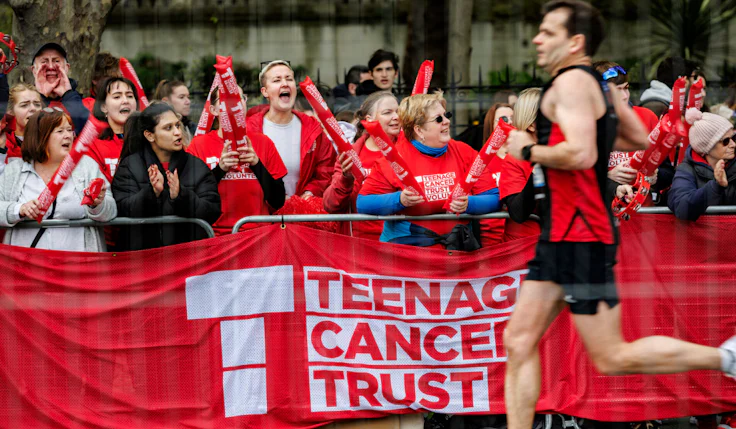
Teenage Cancer Trust also leans into micro-influencers, having started using influencers strategically in 2023 to ensure the voices of young people were being heard, explains digital content strategist Tochi Imo.
Head of marketing Warren Fiveash previously told Marketing Week about the success of the Teenage Cancer Trust’s sit-up challenge, which saw a 51.6% conversion rate from people visiting the landing page for its February squats challenge via its influencer partners. Challenges of this type allow a variety of influencers to get involved, with Imo also recruiting musicians to join relevant campaigns.
Selection has to “make sense”, she explains, as “shoehorning” influencers in leads to content becoming “inauthentic”. The charity also works with young people living with cancer who are micro-influencers.
“In the age we are in now where organic content is so big, it is hard for paid content to grasp people’s attention. But where it’s authentic and well aligned, it can do so,” says Imo.
Teenage Cancer Trust’s recent Instagram collaboration with influencer GK Barry gained 2.3 million views and 62,800 likes, after empowering her to be her “funny, personable self”. Social media reach and engagement are key metrics for the charity.
“That type of reach is so important for brand familiarity,” says Imo.
It’s a delicate balancing act between too much attention on just the ambassador and no one listening to the messaging that they’re trying to get across.
Tom Shore, Malaria No More
Teenage Cancer Trust leans heavily into co-creation. There is a set tone of voice with specific, sensitive terminology influencers must follow alongside other safeguarding guidelines, but creators are given license to make content best suited to their audience.
“We wouldn’t want them to move away too far from [how they present themselves online] so that it becomes like a Teenage Cancer Trust branding thing, as opposed to the influencer being themselves,” says Imo.
Going forward, the charity wants to work with more influencers who are doctors to bring awareness of the signs and symptoms, while also continuing to work with young people who have lived experience of cancer.
For Imo, it’s not about using an influencer with 5 million followers just for the sake of it, but about finding the right fit for the charity and not shoehorning anyone into the mix. She agrees the “line is blurring” between celebrity and influencer, explaining the “approach is not so different” to working with an influencer, such as GK Barry, versus a celebrity like comedian Romesh Ranganathan.
‘Due diligence’
All four charities see the benefit of fostering long-term relationships with influencers, rather than one-off campaigns. Reid explains investing long term helps drive brand association and salience.
However, due diligence has to be done to ensure the influencer’s values align. As Reid explains, it’s important any charity is “protecting the reputation of the organisation”.
“It’s about building those good relationships and having clear lines of agreement, what we think is appropriate and where we think things aren’t appropriate. We have those conversations upfront,” she explains.
Howlett adds that, as influencers or celebrities often aren’t paid, getting them to dedicate time to content can be a potential challenge. Page agrees it’s important charities ensure they’re “being flexible and supportive” with influencers.
Teenage Cancer Trust on partnerships, influencers and ‘thinking differently’
Shore argues the fact celebrities give their time to Malaria No More for free is “powerful”.
“All of that attention and amplification, and convening and networking power that these ambassadors bring is given pro-bono to us, and enables us to be able to work in a much more powerful way,” he says.
All four charities also recognise the power influencers have to reach younger audiences. Alongside this, the marketers acknowledge the appeal of celebrity ambassadors to tap into higher-net worth audiences.
Ambassadors can have “huge networking power”, says Shore, even if this isn’t public-facing. Private advocacy can offer fundraising opportunities or political impact – for example through meetings with MPs in a closed roundtable setting – setting the scene for influencer marketing to unlock even greater potential.