Lloyds’ CMO on putting trust at the ‘heart’ of its narrative
Suresh Balaji notes that AI advertising doesn’t matter if the user experience “falls flat”.
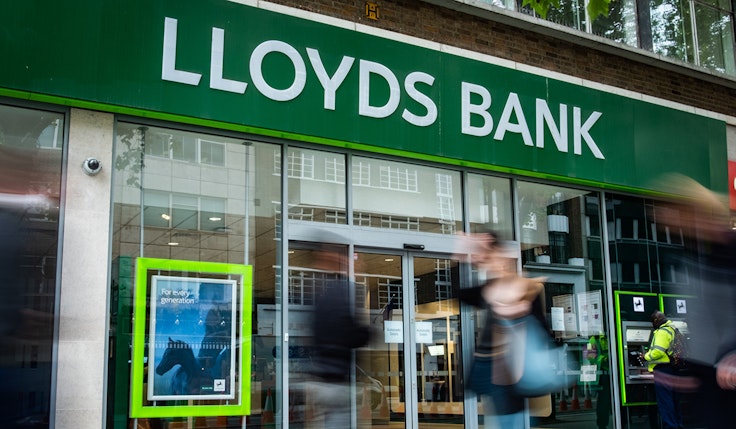 Lloyds want to put trust at the “heart” of its narrative as it looks to be a category leader in a digital world, according to CMO Suresh Balaji.
Speaking at the LEAD conference run by the Advertising Association, IPA and ISBA today (5 February), Balaji said trust would play an increasingly important role as consumers become more sceptical about online advertising.
“In every category, there’s a category leader in the digital world,” he explained. “For me, I chat on WhatsApp. I meet on Teams, I shop on Amazon, I order on Deliveroo, and I bank on Lloyds. It’s the category claim that I wanted to take.”
Trust is therefore a core element of the brand’s recently launched brand platform, which it unveiled last month. The platform is focused on giving consumers confidence that the bank can help “turn their aspirations into reality” and will span outdoor, audio, digital and audio visual.
Lloyds expects to generate £100m in value from AI this year
The comments come as Lloyds recently shared that it has been bullish on AI. Generative AI delivered £50m of value for Lloyds Banking Group in 2025, with the firm predicting it will create more than £100m in additional value this year. As part of this, the company rolled out more than 50 AI use cases last year, focused on enhancing customer interactions and query resolution, as well as providing support to frontline colleagues.
The company has also created an AI blog, firstly documenting ‘Project Turing’, which was in partnership with Ogilvy One. The impact of AI was assessed on end-to-end marketing campaign development, as three teams – one with no AI, one augmented by OpenAI and one only using AI – tackled a real product launch brief.
“The winning combination was that AI and human team,” he explained. “The unexpected thing in that was that we all think we prompt AI, but there was a point where the AI was prompting the human team to think differently and getting them to go to new places that they didn’t go before.”

Despite the brand’s advanced approach to AI, Balaji said this wouldn’t matter if the user experience doesn’t match the promise.
“I could create shiny advertising, I could create the most amazing, award-winning ads, but if the experience doesn’t follow through, and if it falls flat, I think that’s where the trust breaks,” he said. “People end up trading all of the things that they trust for convenience. That’s where I think the whole narrative will change. I don’t know if it is about other creative teams using AI or not.”
Lloyds launches new brand platform amid ‘bold creative reset’
Elsewhere, Sean Betts, chief AI and innovation officer at Omnicom Media Group, discussed the prospect of large language models becoming a “bona fide” marketing platform, following the announcement that ChatGPT would begin testing ads.
Betts said the industry needed to take the development “seriously” due to the scale of adoption and the ways people were already using the platforms for discovery, decision-making and, increasingly, purchasing.
He said taking it seriously meant collectively improving understanding of consumer behaviour, working with AI platforms to assess usage and analysing how brands and products appeared and functioned across the system.
“Fast forward three, four, maybe five years, these platforms will become the dominant front door to the internet for most people,” he said.
“It will be the default for where people go, whether it’s on their mobile or through a desktop browser, to start whatever they want to do online, whether that is finding out information or accessing a digital service.”