The best marketing initiatives of 2025
From campaigns to product launches to uses of data, we have rounded up eight of the standout marketing initiatives of the year. Vote for you favourite to crown the winner.
 Labubu launch
 Labubu launch
It’s been hard to miss the popularity of Labubus this year. Whether it’s the buzz around the “ugly-cute” dolls on social media, or the raft of imitations seen in gift shops and stalls throughout the world, the Labubu collectables have been everywhere.
It’s easy to forget then that mere months ago, very few people in the UK had heard of Labubus. The product range was created by Chinese collectible retailer Pop Mart, which opened its first UK store in 2022.
The furry creatures had already made a splash in Asia and were beginning to make waves in the US, but Pop Mart wanted the Labubu range to become popular in the UK as a broader doorway into Europe.
With a clear goal in mind, the brand developed a creator strategy designed to drive credibility within subcultures, before scaling to the mainstream. It developed a gifting strategy, working with a group of creators it had selected because of their suitability for the brand.
It built on that initial hype by launching a pop-up in Harrods, which helped bring the Labubus to a wider audience. The distinctive-looking toys soon caught the attention of major influencers and celebrities, before gaining PR traction.
While from the outside, it may appear like Labubus came from nowhere and grew organically, the team behind the trend thought strategically about driving hype around the collectibles.
This campaign saw clear success driving a 689% increase in UK social mentions, including 1.5 million TikTok videos. The work delivered a 300% sales uplift, with one store even closing due to “overwhelming demand”. NC
Vote for your marketing initiative of 2025
GoDaddy – Airo platform launch
The importance of brand building, and the value of humour and storytelling, has continued to move up the agenda for B2B brands this year, and GoDaddy has emerged as a prime example of how it is done well.
In late 2024, the website-building platform partnered with actor Walton Goggins, best known for his role in season three of ‘The White Lotus’, to launch the Walton Goggins Goggle Glasses.
The wraparound shades-meet-goggles hybrid appeared at high-profile events, including GQ’s Men of the Year Party, where Goggins sported the look and sparked widespread online interest.
After months of speculation, GoDaddy revealed the campaign’s purpose during the Super Bowl with its hero spot ‘Act Like You Know’. The ad saw Goggins step into exaggerated roles – from detective and astronaut to race car driver – before grounding the humour in the reality of running a small business.
The creative ultimately positioned GoDaddy’s AI-powered solution, Airo, as a tool that enables entrepreneurs to start and grow their online businesses.
Supporting the teaser campaign and main spot, GoDaddy rolled out additional content across TV, YouTube, out‑of‑home, social media and influencer channels, turning Act Like You Know into a year-round creative platform.
The integrated campaign was a resounding success. It generated more than 3,500 earned media placements, over 15 billion impressions, and an 87% increase in traffic to GoDaddy’s Airo platform. It was also secured the Creative B2B Lions Grand Prix at Cannes this year – the top prize for B2B brands. GG
Vote for your marketing initiative of 2025
Vitality – ‘Life’s Pretty Good’
Insurance is not an easy thing to get people excited about. But with the aid of its long-standing brand mascot Stanley the dachshund and a compelling data point, health insurer Vitality was able to grab people’s attention.
After delving into a seven-year study of more than 465,000 members, it discovered Vitality can help engaged users live for up to five years longer. A pretty unique selling point, given most insurers position their policies as a form of compensation for death.
Working with agency partner VCCP, Vitality Life Insurance flipped this narrative on its head, positioning the insurer as a tool to help customers live longer, healthier lives.
The campaign, which spanned TV, social, radio and more, shared this key message, with the hero film showing Stanley cruising along the seafront in a pink Cadillac convertible, while people around him are shown staying active.
It’s a message that resonated. Consideration for Vitality Life Insurance grew by five percentage points in the five months following the campaign launch, while searches for the brand increased 21%.
The insurer also experienced a 19% reduction in cost per lead from lower-funnel social activity, all of which led to a sales increase of 31%, compared to the same period in 2024.
The number of customers associating the brand with living healthier, longer lives rose five percentage points, while customers describing the firm as ‘progressive/innovative’ grew four percentage points.
To top it off, Vitality won the 2025 Marketing Week Award for Excellence in Financial Services. LT
Vote for your marketing initiative of 2025
BBC Studios – Bluey

Few brands have built the same level of cultural capital as Bluey. Since launching in 2018, the Australian children’s programme has become a globally recognised franchise, airing in 140 countries, with audiences consuming 95,000 years’ worth of content.
It’s the number one show across all genres in the US and the most-watched children’s show in the UK. On YouTube alone, the Bluey portfolio has amassed more than 21 million subscribers and over 13 billion lifetime views.
The brand has grown into a billion-dollar business, supported by consumer products, live experiences and licensing partnerships. A movie is also scheduled for release in cinemas in 2027, signalling further expansion of the franchise into long-form entertainment.
Such is the success of Bluey, BBC Studios, which co-commissions the show with the Australian Broadcasting Corporation (ABC) and manages its global distribution and merchandising outside Australia and New Zealand, has restructured its marketing team and hired three senior brand marketers for Bluey.
The company transitioned from a genre-led approach – where teams are divided into shows depending on type, such as scripted and factual content – to a brand-led strategy. This shift created dedicated teams for properties like Bluey, as well as Doctor Who and Strictly Come Dancing as it looks to put Bluey and other shows at the heart of the business.
The long-term ambition, according to Shelley Macintyre, interim CEO of brand and licensing, is to achieve 100% awareness and position Bluey as “the next Mickey Mouse”.
The impact is reflected in BBC Studios’ financial performance. In its 2024/25 full-year report, the company posted record revenues of £2.2bn, alongside a fourth consecutive year of EBITDA exceeding £200m, reaching £225m, an 11% year-on-year increase on the previous period. GG
Vote for your marketing initiative of 2025
Sainsbury’s – Personalisation and data use
 Personalisation in retail isn’t a new concept, but as technology and data capabilities develop, what brands do to innovate in the space is key, with Sainsbury’s being one of the frontrunners of this through its Nectar scheme.
This year, Sainsbury’s achieved its highest ever market share, growing for a fifth consecutive year, with the supermarket claiming Nectar gives it a “competitive advantage”.
Going forward, its CEO Simon Roberts sees “personalised value” playing “a very important role in winning in this industry”. He said customers are “loving” personalised Nectar prices as it allows them to get “their own value unique to them”.
Nectar has also been key in the grocer’s efforts to increase value and price perceptions. Earlier in the year, it rolled out more personalised Nectar pricing, with 10,000 products now available on the scheme. On an £80 shop, customers are saving an average of £14 through Nectar pricing.
This is among a backdrop of many companies leaning into loyalty. Data from the Competition and Markets Authority last year found loyalty pricing, specifically in grocery, is becoming an even bigger part of the customer experience. Some 97% of shoppers are a member of a least one scheme.
Sainsbury’s is working to a goal of delivering 500 million personalised offers a week, with over a million customers accessing personalised savings every seven days, helping to drive people to stores and online, and contributing its market share boost.
Personalised offers complement Sainsbury’s other value pushes, including its Aldi Price Match, which has been extended to around 800 products, driving 6% growth in convenience sales and the supermarket’s “highest ever customer satisfaction score”.
Sainsbury’s personalisation drive also contributed to its chief technology, data and marketing officer, Mark Given, being named Marketer of the Year at this year’s Marketing Week Awards. AV
Vote for your marketing initiative of 2025
Fairy – Skip The Soak product launch
Perhaps the hardest thing a marketer can do is find a new entry point to a product that everybody is already keenly aware of.
Take washing-up liquid Fairy, for instance, it’s a product that everybody knows and understands how to use: add water, make bubbles, clean pots. Sure, you can explain how it performs than its rivals, but beyond that how do you gain any meaningful difference?
The answer is a keen data-driven insight well implemented. Fairy launched ‘Skip The Soak’ built off research showing that 80% of people soak or partially wash their dishes before cleaning them by hand or putting them in the dishwasher.
Something that is both time-consuming – and considering washing the pots is seen as Europe’s second-most hated chore – a pain point for consumers too.
Fairy Skip The Soak was designed to alleviate the pre-soaking ritual and meant customers could finish washing the pots in minutes rather than being faced with them the next day.
Its launch led to an impressive 5% category value growth and it has found a place in 8% of UK households, driven by the effectiveness of its supporting campaign on platforms such as TikTok.
The lesson being that customer research matters more than trialling a new flavour or variant – and when taken seriously and applied effectively it can be a driver of growth for businesses, even in a category where you are the market leader. JS
Vote for your marketing initiative of 2025
Audi – ‘Light, as you like it’
Audi’s ‘Light, as you like it’ campaign sets out to challenge category norms. It does so by dialling down the technical sell and leaning into something more human.
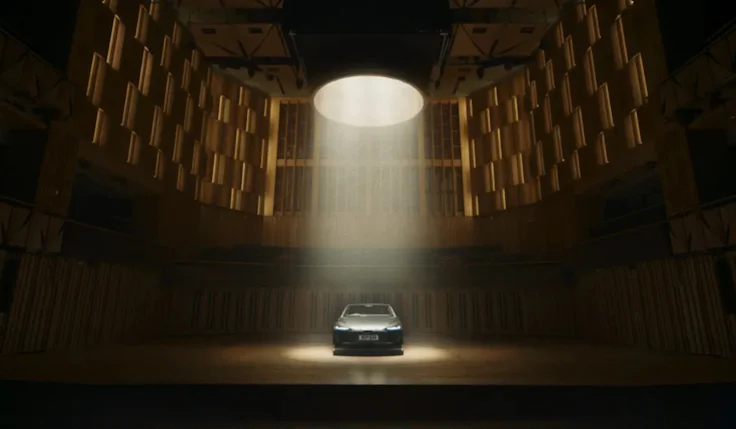
Rather than rolling landscapes and product close-ups, a choir all dressed in black is shown performing a rendition of Reel 2 Real’s ‘I Like to Move It’ sat inside Audi’s A6 Avant e-tron – a clear standout in a sector where advertising can be largely similar.
By forgoing the drone shots of long winding roads, Audi and agency partner BBH have delivered something truly memorable.
This is key when given how tough the UK car market currently is. New brands, particularly in electric vehicles, are flooding in, while total sales volumes have not recovered since the pandemic, according to the Society of Motor Manufacturers & Traders (SMMT).
Betting on what makes Audi ‘Audi’ has paid off. Audi’s brand “desirability” score has risen five percentage points over the past year, a central goal for marketing director Tony Moore.
Taken together with Audi’s pre-existing advertising heritage as well as the creative freedom afforded by its 40-year partnership with BBH, Audi’s offering remains distinct in the premium market.
Performance indicators around the campaign point in the same direction. Consideration increased by 5.1%, while top-of-funnel traffic doubled. Direct leads landed at triple the initial target, and the work also generated Audi’s highest organic social reach for a product campaign.
“If you can build [desirability], you drive long-term growth. We know a 3% rise in desire gives a 5% lift in leads over time,” Moore said in October. EM
Vote for your marketing initiative of 2025
M&S – ‘Love That’
M&S’s ‘Love That’ campaign was one of its first major campaigns post-cyberattack – and one of Sharry Cramond’s first spectacles as the brand’s fashion, home and beauty marketing director.
Taking a YouTube-first, episodic approach, the campaign, launched at the start of September and still running now, comprises of 48 episodes helping shoppers with fashion and style. It is hosted by “relatable” celebrity stylist Melissa Holdbrook-Akposoe and Capital Breakfast hosts Jordan North, Siân Welby and Chris Stark.
From one episode, M&S saw a total reach of 1 million people across seven organic assets in the first week, a positive sentiment rating of 100%, which Cramond called a “first”, and YouTube content surpassing 13,000 views in five days.
The leather shoulder bag featured in the video also saw a 482% increase in visits compared to the four days before the episode was released, with over 6,000 visits to the product page.
The push into longform content was to show the role M&S can play in fashion advice and offer a “behind the scenes” look at the company and its products. It mirrors a wider industry trend of YouTube becoming a primary channel for many brands.
This series also coincided with the launch of the ‘M&S Man’ Instagram account, tailored to menswear. It complements the retailer’s existing social presence, including the M&S Insiders ambassadors scheme, with its goal to reach new audiences, specifically younger ones, through 600 store-based accounts on TikTok.
All of this, tied together with the brand’s decision to move away from having one hero ad and take a “contemporary” approach with mini content drops for fashion this Christmas, signals a new path for marketing for the department, as it adapts to its shoppers moving to purchase in “phases”. AV
Vote for your marketing initiative of 2025
The vote is now open. Help us crown Marketing Week readers’ marketing initiative of the year.