How Vaseline drove sales by making creators ‘co-authors of its stories’
In line with Unilever’s recent focus on influencer-led content, the 150 year-old brand leant into social media to put itself in front of new audiences.

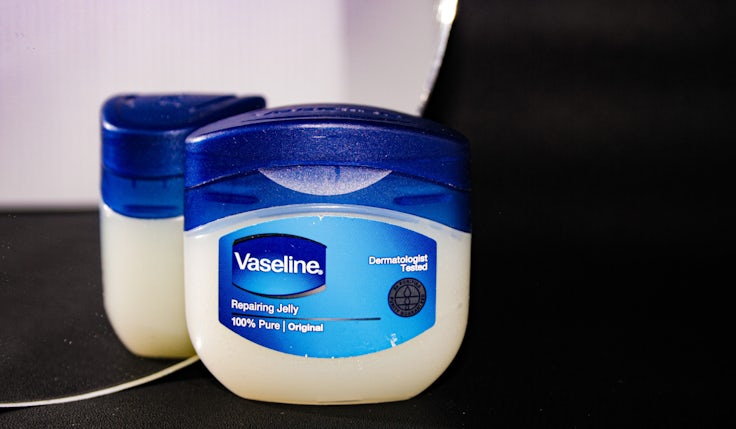
Vaseline is co-creating with influencers and “leaning into” the online conversation to drive growth, according to the heritage skincare firm’s global brand director.
Founded in 1870 and owned by consumer goods giant Unilever, 150 year-old Vaseline has adopted a thoroughly modern way of brand building via social media.
Global brand director Nathalia Amadeu outlined this approach during the IPA Effectiveness Conference today (8 October). She was speaking alongside Jellyfish vice-president of brand strategy and Marketing Week columnist Tom Roach. He shared his view that, in an era of increased media fragmentation, brands must look to create “a system of ideas” and tap into “imaginative repetition” to drive effectiveness.
Amadeu explained Vaseline’s approach has been “catalysed by the power of lots of littles”. When it came to harnessing the power of social media, Vaseline had a lot of material to work with given the 3.5 million pieces of content relating to the brand already online.
However, much of this content shared unconventional hacks for using the brand, from putting Vaseline on pet dog’s noses to applying it to hinges to fix squeaking door frames. Rather than fighting the “chaos” or “wild west” of social media content, Vaseline decided to lean into it.
“This really was an invitation for us to step in and help drive engagement that brings value in a meaningful way,” said Amadeu.
In an age where there is less fact-checking and misinformation can spread like wildfire on social media, the brand saw an opportunity to combine its authority and heritage with influencers’ creativity. The company introduced the ‘Vaseline Verified’ platform, working with creators to introduce verified, scientifically proven uses for the product.
Unilever’s CMO on using ‘creators’ voices’ to win over ‘sceptical’ consumers
Creators had an opportunity to get their hacks “verified”, something that not only showcased their creativity, but gave consumers with new examples of how to use Vaseline beyond skincare. For example, as a barrier to protect their lips when eating spicy food.
“We made creators co-authors of our stories,” said Amadeu.
The campaign drove double-digit sales impact, allowing Vaseline to reach communities and people it had “never” reached before. Indeed, the platform was highly awarded at this year’s Cannes Lions Festival of Creativity, scooping a coveted Titanium Lion.
The Vaseline Verified approach is symbolic of a wider shift at Unilever, as the FMCG giant seeks to drive “desire at scale” largely through influencer activity. CEO Fernando Fernandez has committed to hiring 20 times more influencers and spending up to half the budget on social channels.
This sentiment was echoed by chief growth and marketing officer Esi Eggleston Bracey earlier this year, when she spoke about using “creators’ voices to express the brand”.
“At Unilever, I talk about we’re moving from that old model of a one-off broadcast to getting many people to communicate with many other people on your behalf. It’s the only way,” she said.
IPA data released today revealed the return on investment of influencer marketing “outperforms” linear TV and paid social.
Based on 59 UK campaigns, the short-term ROI of influencer marketing was found to be comparable with all channel averages, delivering a short-term ROI index of 99, aligned with the all-channel average of 100. Some 4.5% of short-term sales from the campaigns were also driven by influencers.
Despite the short-term sales percentage for linear TV being 32% compared to influencers at 4.5%, the ROI index is comparable with the return on investment for influencer marketing coming in at 99 versus linear TV ranking at 97.
The ROI index for influencer marketing also exceeds standard paid social (86), despite paid social having a 13% sales contribution.