Did Jet2’s unplanned TikTok virality have a positive impact on the brand?
Amid claims the viral ‘Nothing beats a Jet2 holiday’ meme proved “hugely beneficial”, we analyse the impact on awareness, consideration and value.
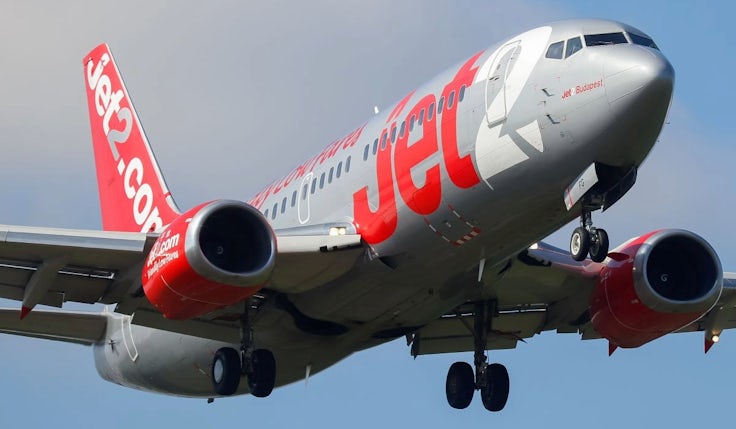
If you, or anyone close to you, spent even a few minutes on TikTok this summer, chances are you encountered the viral Jet2holidays meme.
The budget travel brand unexpectedly became the focal point of one of the platform’s biggest trends, as users paired clips of chaotic British holiday moments – airport fights, water-sports mishaps, drunken night-outs – with Jess Glynne’s ‘Hold My Hand’, the soundtrack used in Jet2holidays’ advertising.
The tagline ‘Nothing beats a Jet2holiday’ became an ironic punchline for videos showing the exact opposite.
Speaking to media on Jet2’s half-year results today (19 November), CEO Stephen Heapy said the company’s accidental virality was “hugely beneficial” for the brand, delivering an uplift in awareness and engagement, particularly among younger audiences.
“We’ve said in the past that this is one of our objectives – make the brand better known amongst the younger demographic and this has certainly helped,” he said.
The meme reached over 80 billion global views across 11.8 million social media posts, with Hold my Hand named the global ‘Song of the Summer 2025’ by TikTok.
‘Like a startup’: Inside the rise of travel media networks
That cultural moment may have also helped contribute to the brand’s commercial performance.
Jet2 carried 14.09 million passengers in the 26 weeks to 30 September, an increase of 750,000 passengers year-on-year. Membership of its myJet2 loyalty programme rose 62% to more than 8.4 million subscribers. Group revenue grew 5% to £5.34bn, while operating profit increased 2% to £715.2m.
Some of that momentum may stem from how the brand handled the trend. Social media audiences can be quick to criticise businesses for “ruining” a meme if they take it too seriously, the opposite of what Jet2 did.
“When the meme started, we started speaking to some advisors and their advice was not to interfere, because as soon as a big corporate brand starts to interfere in a meme like that, it’s seen as becoming uncool and then it stops,” Heapy explained.
@rsayheya You’ve gotta love an English Summer #camping #england #cornwall #nothingbeatsajet2holiday
Using exclusive data provided by YouGov from brand tracking tool BrandIndex, we have taken a closer look at whether Jet2’s unplanned virality had a positive impact on its brand.
The TikTok trend has certainly had a positive impact on how aware people are of the business.
Since the beginning of the year, overall awareness among 18-to-49-year-olds rose sharply, climbing from 79% in January to a peak of 93% in August. Ad awareness saw an even steeper trajectory, increasing from 19.9% at the start of the year to 55.7% at its August peak.

Attention – YouGov’s measure of whether consumers have heard anything about a brand, positive or negative – rose from 12.1% of the UK population in January to 36.5% by mid-September.
Consideration also improved, growing from 27.9% to a high of 35.7% in October, before easing slightly. Purchase intent followed a similar pattern, rising from 9% in January to 16.6% at its peak, proving that virality – even with negative connotations – can have a positive impact on whether people choose to buy.

However, not all metrics moved positively. Despite Heapy’s assertion that “negative sentiment was massively drowned out by the positive sentiment”, perceptions of quality declined throughout the year.
When asked whether Jet2holidays represents ‘good’ or ‘poor’ quality relative to competitors, consumers rated the brand at a net 17.7% positive in January. By early October, that score had fallen to a net 7.2% – its lowest point of the year.
The decline was steeper among younger adults. For 18-to-34-year-olds, quality perceptions fell to a net 0.3% in October. Since then, the score has begun to recover, although it remains below its starting level.
Reputation scores, based on whether respondents would be proud to work for the brand, also dropped. Jet2holidays entered the year with a net reputation score of 14.6%, which fell to 4.1% in October.

One area of strength was value, which Heapy reiterates is important for the brand. Jet2holidays has focused on being flexible with package holidays or flight-only bookings in response to the late booking trend – making a reservation shortly before the intended date of departure.
“We’ve said in the past that we’ve got a brand that attracts people. We’ve got a brand that people trust. And I think in economic times like we’re in at the moment, people tend to gravitate to brands they trust,” he said.
“They may not go for the lowest price in the market. They want to make sure they get value for money and I think that’s what we have provided.”
The share of respondents who said Jet2holidays represents good value for money increased from 22% in January to 29% in August. Value perceptions have since tapered, but remain above early year levels.
‘Simplify, humanise, unify’: B2B brands on avoiding social media’s ‘sea of blandness’
Despite the dips in quality and reputation, Heapy insisted the brand “is not worried at all”, arguing the overwhelmingly light-hearted nature of the meme overshadowed any negative connotations.
“The majority of posts were happy, cheerful, funny posts that I think only served to increase the perception of the brand, and that massively outweighed and drowned out any noise from the less popular ones,” he said.
Among competitors, Jet2’s virality may have helped push consideration above rivals Easyjet and TUI.

For Jet2, the data presents a nuanced picture. The brand achieved enormous reach and attention, translating into higher consideration, purchase intent and, ultimately, stronger sales.
But the TikTok moment may also have contributed to a softening of perceptions around quality and reputation, metrics that can influence long-term brand equity.
Jet2’s next priority is to use the momentum to encourage earlier bookings. Heapy said the business will continue to lean into its recent marketing technology investments to deliver more personalised and timely communications.
“This technology will give us more ability to reach the right customers at the right time with the right product, the right content, the right images, the right price, via the right channel,” he said.
“So marketing will become much more relevant and much more timely to customers, and hopefully incentivise them to book earlier.”
The challenge now is whether Jet2 can maintain its gains with more traditional marketing activity or whether the brand will need another viral moment to repeat the success of its unplanned fame.