‘Cultural humility’: Macmillan on ‘setting a new benchmark’ for inclusive marketing
Macmillan is using its Open House initiative to reach marginalised communities, as the charity looks to build consideration in 2026.
 Upon joining Macmillan Cancer Support at the start of the year, chief engagement officer Sonia Sudhakar explained her goal was to reach marginalised communities and increase the charity’s push on diversity.
“I don’t know that as an industry we’ve cracked it. It’s one of the reasons why I came to Macmillan as it’s an area I really hope we can help lead the way on,” she said at the time.
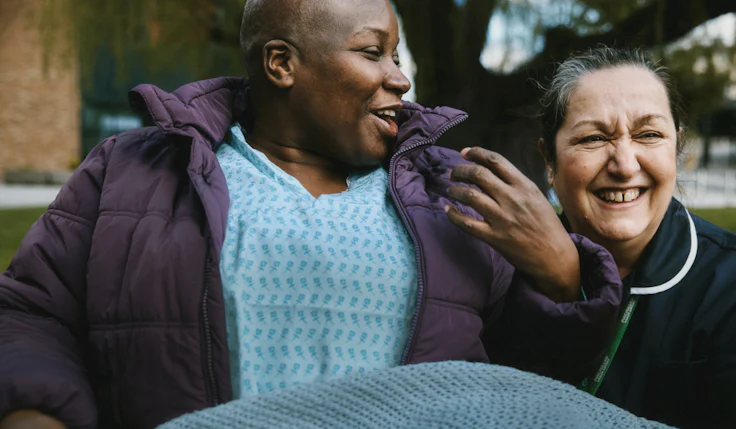
Ten months later, the charity hosted ‘Open House’, an in-person event designed to engage diverse communities and spark honest conversations about cancer, breaking down the barriers that prevent many black and South Asian people from accessing support.
Sudhakar explains there was a feeling “traditional media is not really going to do the job” when it came to focusing on these communities, something she was passionate about tackling as a second generation Asian woman herself.
This led the Macmillan team to make a “brave move” and host last month’s Open House event. Sudhakar explains that while it “might not be as cheap and easy as signing off a line on a media plan”, different approaches are needed to achieve the strongest impact.
“It is definitely worth it and taking a different approach that’s much more bespoke and tailored is essential, not just a good option,” she adds.
Macmillan’s first chief engagement officer on driving income and impact
Across two days, there were a mix of panel talks, Q&As, lived experience discussions and activities such as yoga, running and henna application. The team wanted to “set a new benchmark for inclusive marketing”, with a wider goal to close long-standing gaps in cancer awareness, early diagnosis and access to support.
The initiative was born out of research from Macmillan, which found marginalised groups have different experiences of cancer and cancer care in the UK.
“We also knew we maybe have a bit of an issue with connection with those communities and that they might not see us [Macmillan] as being for them,” says Sudhakar.
Working with agency The Elephant Room, Macmillan sought advice from creators and cultural experts on how to approach Open House to best engage attendees.
According to one attendee, the “community, the culture, the connection” made the event “exactly the space” the community needed.
On putting the event together, Sudhakar explains there were “two sides” to consider – the “space, atmosphere and setting” and the content.
“I didn’t realise how much the first would be critical, actually. I was worried maybe that we were overrating it, but actually what the space and the feeling did was it really made people feel seen. Like we understood and that they were safe to relax, take full advantage of the content and really lean in, and get involved,” she reflects.
The setting was made to resemble “your grandma’s living room” thanks to “instant cultural cues”, while guests were offered Indian and Caribbean food.
The feedback noted the cultural cues set the tone for the content, which included panel discussions run in a “comfortable, intimate setting”, featuring influencers, community groups, those with lived experience of cancer and Macmillan professionals.
‘The new way’
Success of the event was measured in terms of the impact and ongoing reach, mainly driven by influencers from the targeted communities attending the event – content which Sudhakar calls “priceless”.
“It was a targeted approach to get impact within the right communities. Now, we are tracking all of the ongoing posts, TikToks and Instagrams that have come off the back of that,” she adds.
The intention is to build relationships with these influencers and work with them on an ongoing basis, with some already coming back to the charity and expressing interest in collaborating again.
The most important principle is about cultural humility and to give over spaces…to collaboration with people from that community.
Sonia Sudhakar, Macmillan
Sudhakar explains the use of influencers and the “democratisation of media” helps take content decisions out of “lofty rooms with people that are quite affluent making decisions”. Creators are close to their audiences, she notes, which is a more authentic way to connect than trying to use media to “buy your way” in.
“It is about understanding that the old way is about scale, reach, and volume. The new way is about relationships and putting more effort in, and fewer people, but with deeper impact,” says Sudhakar.
Open House is part of the charity’s wider partnership strategy aimed at tackling cancer inequality, such as The Beauty of Support project with South East London hairdressers and The Barbershop Project in South London. Macmillan also recently launched the Care Grants Programme, its first open-access fund supporting community projects addressing inequities in cancer care.
Going forward, lessons from the event will be embedded in the charity’s future campaigns. Sudhakar is aware it’s important to replicate such events in more accessible ways too so more people who aren’t in London can attend. She calls the in-person event a “great learning ground”.
“What we learned from it is some real principles that we want to take forward. The most important principle is about cultural humility and to give over spaces – and that could be a virtual space, it could be a digital space – to collaboration with people from that community. I don’t think you need to do that through an in-person event,” says Sudhakar.
Cross-functional working
Alongside reaching marginalised communities, Sudhakar’s goal at Macmillan is moving away from a focus on spontaneous brand awareness towards consideration, building “affinity and familiarity” to ensure people understand what the charity does.
She admits this is “proving to be a bit of a challenge”, because it requires a “different shape media plan” for different audiences. Sudhakar underlines who important it is the charity can clearly explain what it does given the wide remit of services.
Doing this while using “the different layers of marketing activity”, from awareness to performance and consideration activity, is something the Macmillan team will “have to learn hard and fast next year” to make the most of 2026, she adds.
What the space and the feeling did was it really made people feel seen.
Sonia Sudhakar, Macmillan
Back in February, Sudhakar discussed her intention to move towards squad working and using first party data more in Macmillan’s marketing, two aims which have “progressed quite a lot”. Squad working has enabled people at “all levels” to work cross-functionally and develop their skillsets across the company, she claims. Work is also ongoing to assess the charity’s data capabilities.
The idea is to eventually pivot to a “more audience-focused” approach, whereby Macmillan can target people on a “more tailored basis” with the right message at the right time”, and not just for fundraising. This work has included a WhatsApp trial offering the charity’s services.
Going into 2026, one of Sudhakar’s main priorities is not to “leave a bunch of empty promises” with Open House. Her team will be “doubling down” on engaging with marginalised communities, as well as finding new ways to offer support.