‘More distinctive and consistent’: Why ITV is investing in brand to drive its next stage of growth
ITV is shifting its focus from product-led growth to brand building as it looks to stand out against the streamers, with a new brand platform and biggest marketing push since ITVX.

ITV has launched a new brand platform as it looks to enter its next phase of growth, marking its biggest brand-led marketing investment since the launch of its streaming platform ITVX in December 2022.
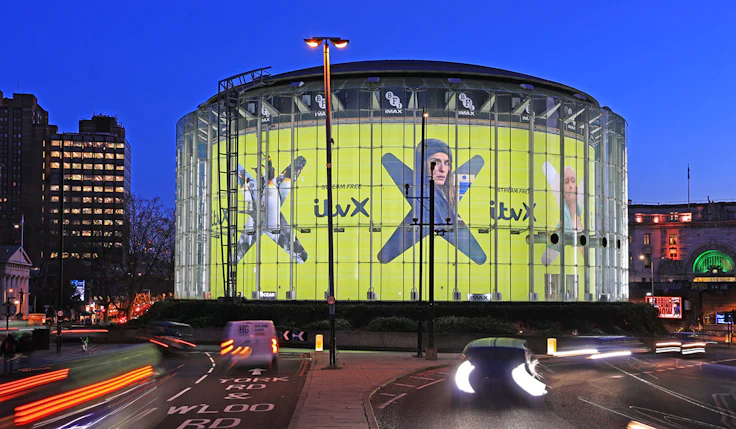
Launched on 1 January, ‘There’s No Place Like ITV’ is a fully integrated campaign running across TV, radio, online, social and over 50 OOH placements nationwide.
The campaign signals a strategic shift for the broadcaster, which is moving from a product-led focus on ITVX to a broader emphasis on the ITV brand itself.
After three years of accelerating growth for ITVX, director of brand and marketing Paul Ridsdale says the business is now ready to rebalance its marketing strategy.
“We’re now looking where the next phase of growth will come from,” he tells Marketing Week. “We have big ambitions to continue growing, and we see the ITV brand as a real asset we can leverage to drive that next stage.”
Viewers want great TV, and they need to be able to find it easily and we see brand as a really crucial part of that.
Paul Ridsdale, ITV
Since the launch of ITVX, ITV’s marketing efforts have focused heavily on building awareness and usage of the streaming platform. Now, Ridsdale says, the company wants to “ladder back up” from the product to what ITV stands for more broadly in a competitive media landscape.
“We’ve always had this amazing brand, but we need to make sure we’re making the most of it as an asset for the business,” he says.
The timing reflects changes in viewing behaviour and the scale of content now available to audiences. Competition across streaming services continues to grow, while the volume of content available on each platform has also increased. ITV’s own on-demand offering has expanded from around 1,000 hours on ITV Hub to more than 26,000 hours on ITVX.
That growth has made brand increasingly important at the point of choice, Ridsdale argues.
“What surprised us in our research is that around 60% of the time, when people sit down to watch TV, they don’t have a specific programme in mind,” he says. “They’re in browsing mode. In that moment, brand becomes really important.”
The goal, he explains, is to encourage audiences to default to ITV when browsing for something to watch, rather than instinctively opening a global streaming app.
“We want people to come into ITVX and explore, rather than defaulting to Netflix or Disney+ or whoever it might be.”
And it all comes just two months after ITV confirmed it is in talks with Sky over the sale of its broadcasting arm to the company.
The preliminary discussions focus on ITV’s media and entertainment division, which includes its free-to-air TV channels, as well as ITVX.
A sale of ITV’s broadcast and streaming channels to Sky would bring together two of the UK’s biggest TV advertising platforms under one roof, likely to make up a 70%+ share of the UK TV ad market, according to media analyst Ian Whittaker.
A campaign built on shared experience
At the centre of the new platform is a 60-second brand film directed by Felix Brady and produced by Stink Films. The film takes viewers on a time-jumping journey through the history of entertainment, from Shakespearean theatre to modern-day reality TV, showing how audiences have always shared emotional responses to storytelling.
Whether watching a play centuries ago or tuning into ‘I’m A Celebrity…Get Me Out of Here!’ today, the film positions ITV as part of a long tradition of shared viewing experiences that bring people together.
The new platform follows around 12 months of internal work on ITV’s brand positioning, including a review and update of its distinctive brand assets.
“We’ve been doing a lot of work on the look and feel of the ITV brand,” says Ridsdale. “The aim has been to make it much more distinctive and more consistent.”
A key element of that work has been the introduction of ITV’s ‘spark yellow’ as a core brand colour. First established during the ITVX launch, the colour is now being used more prominently as a distinctive brand asset across ITV marketing.
“You’ll see that in this campaign,” Ridsdale says. “Even though it’s an ITV brand campaign, we’re using spark yellow in a bold, front-and-centre way to finish off that story.”Sky, Channel 4 and ITV partner on premium video ad marketplace
The renewed brand focus comes against the backdrop of strong performance from ITVX. As of 30 November, the platform had reached 3.3 billion streams, hitting the milestone a full month earlier than in 2024.
ITVX continues to position itself as the UK’s leading commercial broadcaster video-on-demand (BVOD) service. Since launch, ITVX viewer hours have grown at a compound annual rate of 25%, compared with 16% across its key commercial BVOD competitors combined, according to ITV.
Ridsdale says that success has created the conditions for a broader brand investment.
“We’ve had a great three years, but now, we absolutely have ambitions for that to continue growing and growing fast in the market, and we think this investment in the brand can really help us to do that,” he adds.
Despite growth in streaming hours on ITVX, the broadcaster warned in its third quarter trading update in early November, it expects its total advertising revenue to decline by around 9% in the final quarter of the year.
This projected decline is steeper than what is predicted in the broader UK TV advertising market, which is forecast to decline by 5% in the final quarter of 2025, according to AA/Warc data.
Relatability and belonging
As part of the preparation for the new platform, ITV conducted qualitative research with audiences across the UK to understand how the brand is perceived relative to competitors. Two themes stood out consistently: relatability and belonging.
“People talked a lot about recognising themselves in our shows – whether that’s the people, the places, the themes or the issues we cover,” Ridsdale explains. “We tell those stories in a way that feels relatable.”
That relatability, he says, creates an emotional benefit for viewers.
“The emotional benefit of that relatability creates this idea of belonging. People described ITV as a brand that helps them feel like they belong.”
Those insights have informed both the creative direction and the broader ambition of the brand platform. Ridsdale hopes the work will help ITV become a default choice for viewers faced with endless choices.
“Our content is much more relatable than many global platforms because it’s rooted in British content,” he says. “But even compared with other UK broadcasters, we’ve always had a heritage of being much more down to earth and level with people.”ITV in talks with Sky to sell broadcast arm
The renewed focus on brand is not limited to external marketing. Internally, ITV has made structural changes to strengthen brand management across the organisation.
The marketing team has been renamed the ‘marketing and brand’ team, and ITV has appointed its first head of brand, Sarah Footman, whose remit is dedicated solely to brand management.
“Campaigns are still a big part of what we do,” says Ridsdale. “But we also wanted to be a team that really thinks about brand management and how the brand is activated across all the different touch points.”
The brand work also builds on ITV’s 70th anniversary, which acted as a catalyst for the launch of an internal brand purpose called ‘Making What Matters’. Designed to articulate ITV’s purpose from an employee perspective, the internal brand celebrates the organisation’s role in creating culturally significant content.
“People have always said ITV is a great place to work, but we’d never really captured why in a clear set of words,” Ridsdale explains. “Making What Matters will be something we continue to use internally.”
This is also the first major brand campaign from in-house agency ITV Creative since the arrival of Niki Garner as director of ITV Creative, Tom Houser as ECD and Tatiana Jezierski as head of strategy. The in-house agency have been key in driving the “redefinition” of ITV over the past year.
You can’t make a big brand claim without the substance to back it up.
Looking ahead, ITV is entering a strong period for content, which Ridsdale sees as essential to supporting its brand ambitions. The year ahead includes major sporting events such as the FIFA World Cup and the Six Nations, alongside new series of established formats including I’m A Celebrity… and a slate of new commissions.
“It’s an incredibly rich year for content,” he says. “You can’t make a big brand claim without the substance to back it up. It was really important to have a really rich spectrum of great content to back up the brand promise that we’re making to viewers.”
While content remains central to ITV’s strategy, Ridsdale stresses that brand plays a crucial supporting role. For ITV, the challenge now is to ensure that its growing content portfolio, distribution strategy and brand investment work together to sustain growth in a competitive market.
“Content is absolutely key, and distribution is another,” he says. “Viewers want great TV, and they need to be able to find it easily and we see brand as a really crucial part of that.”